

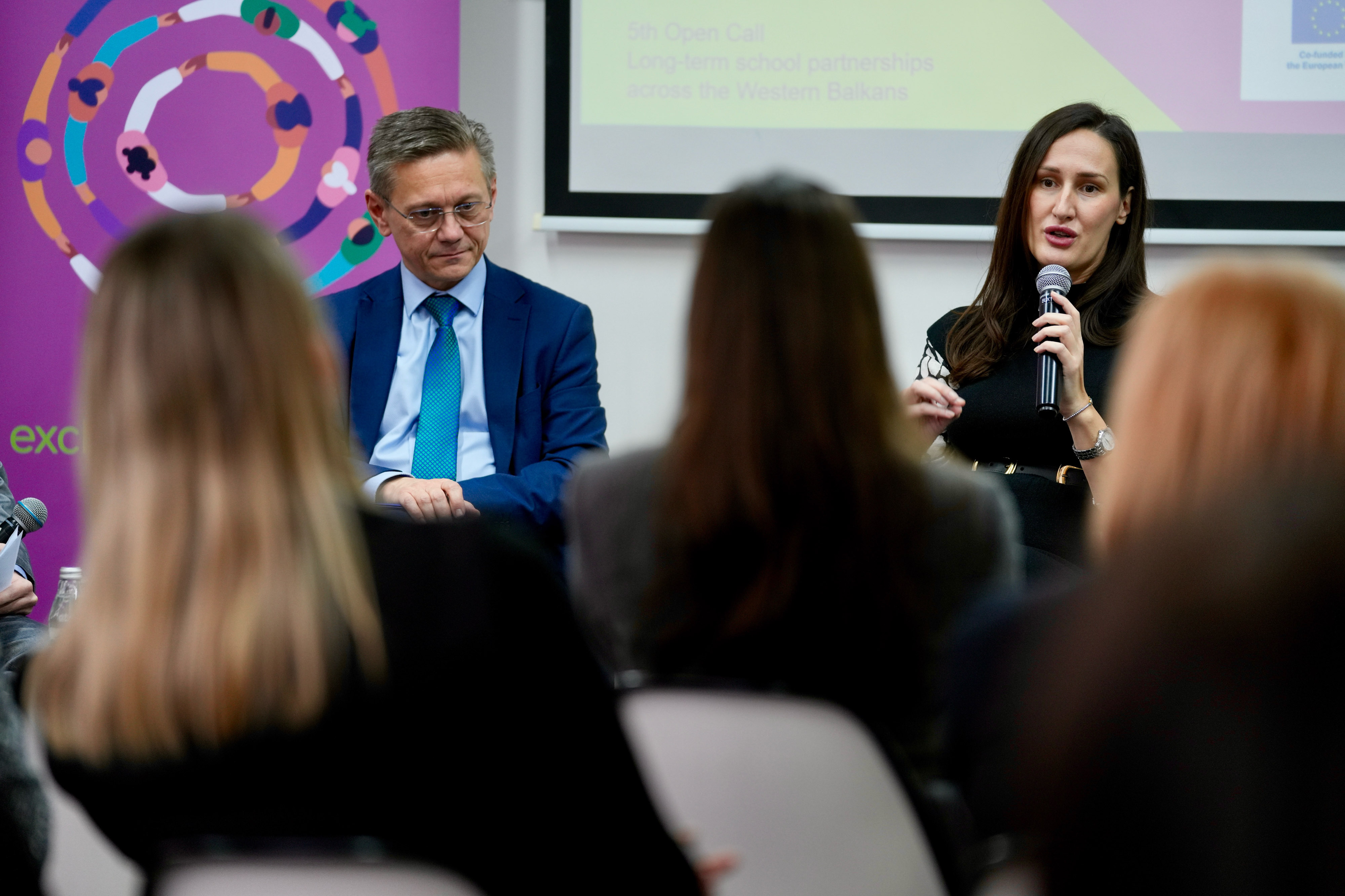
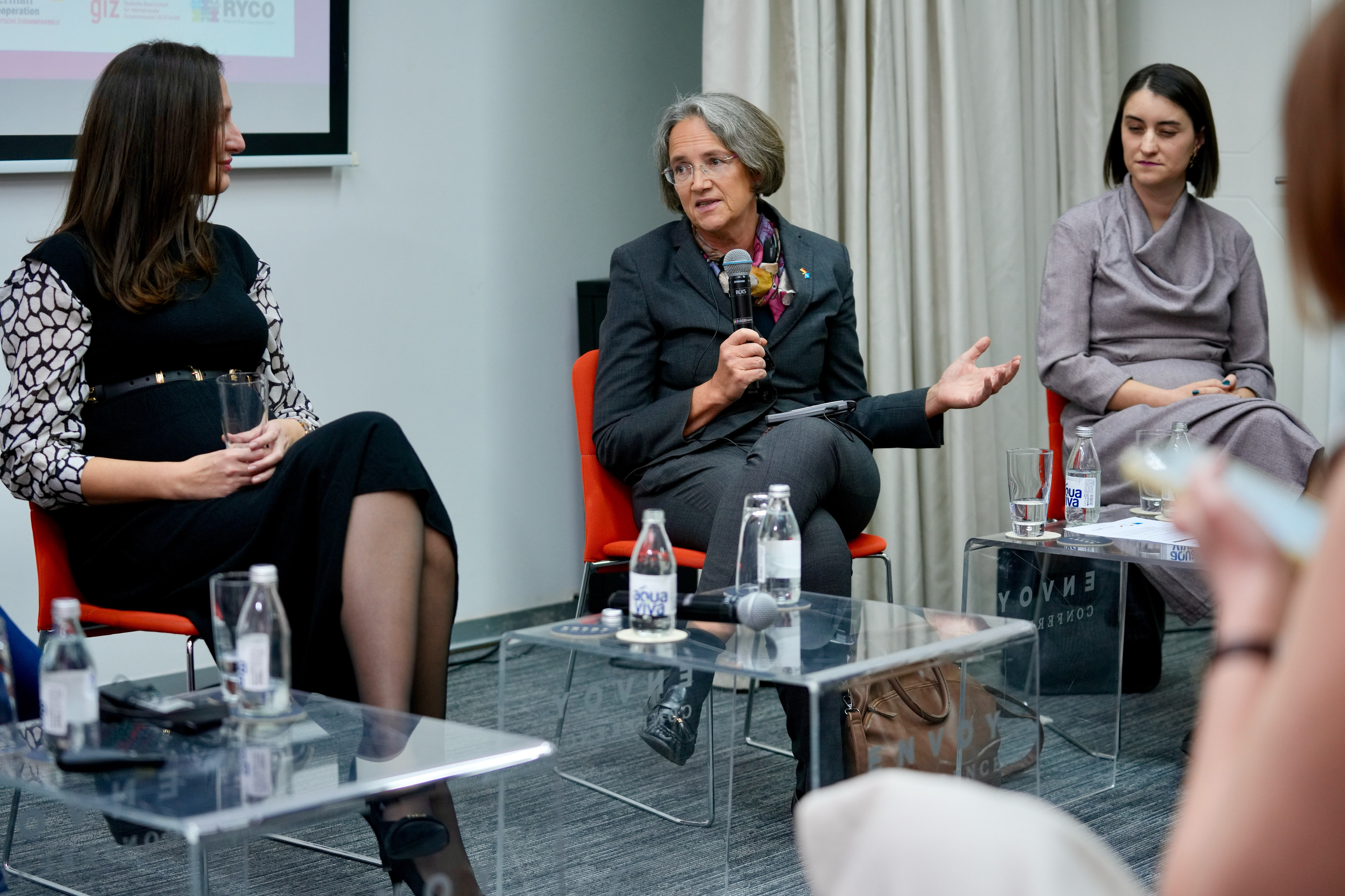
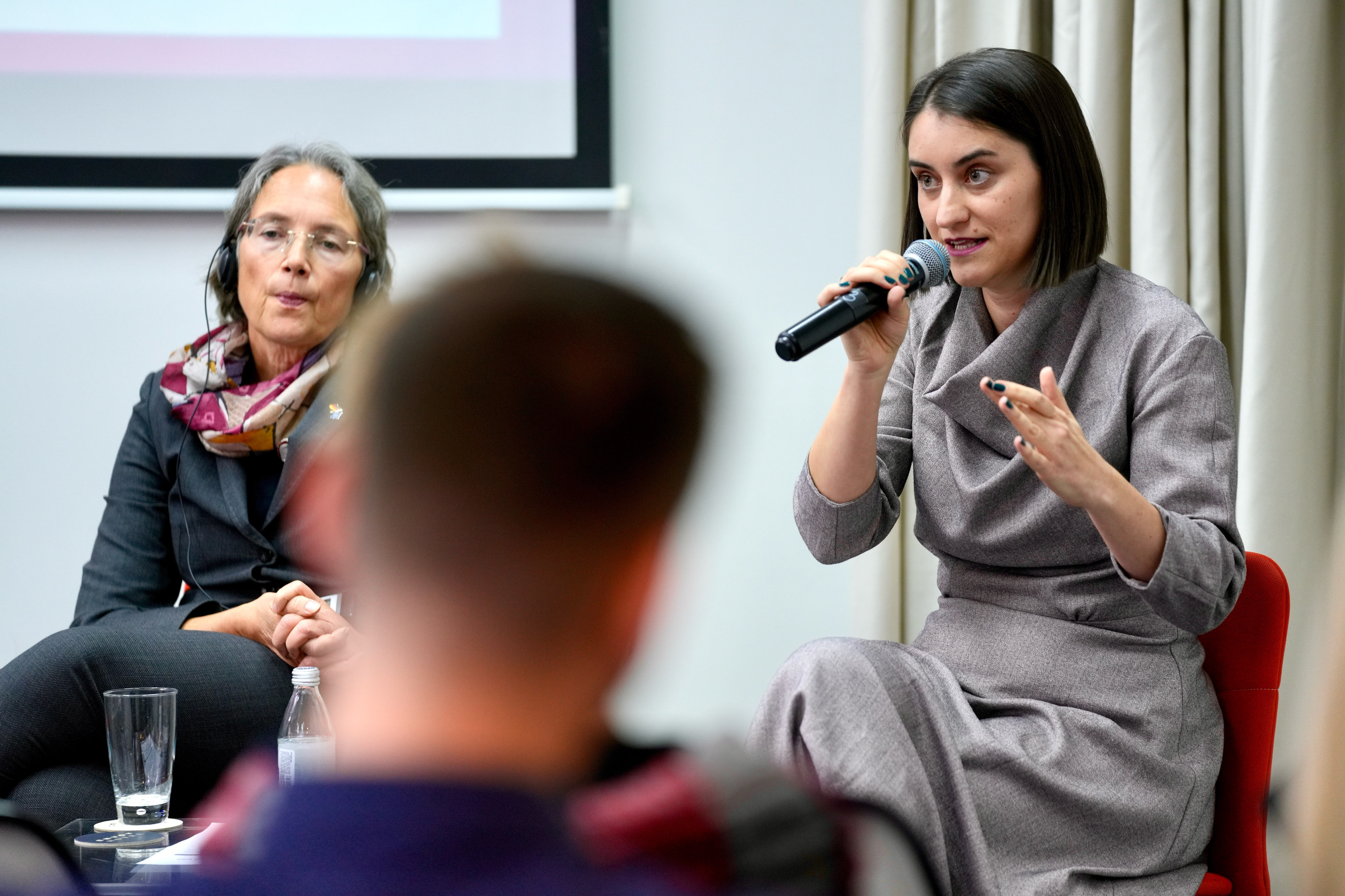
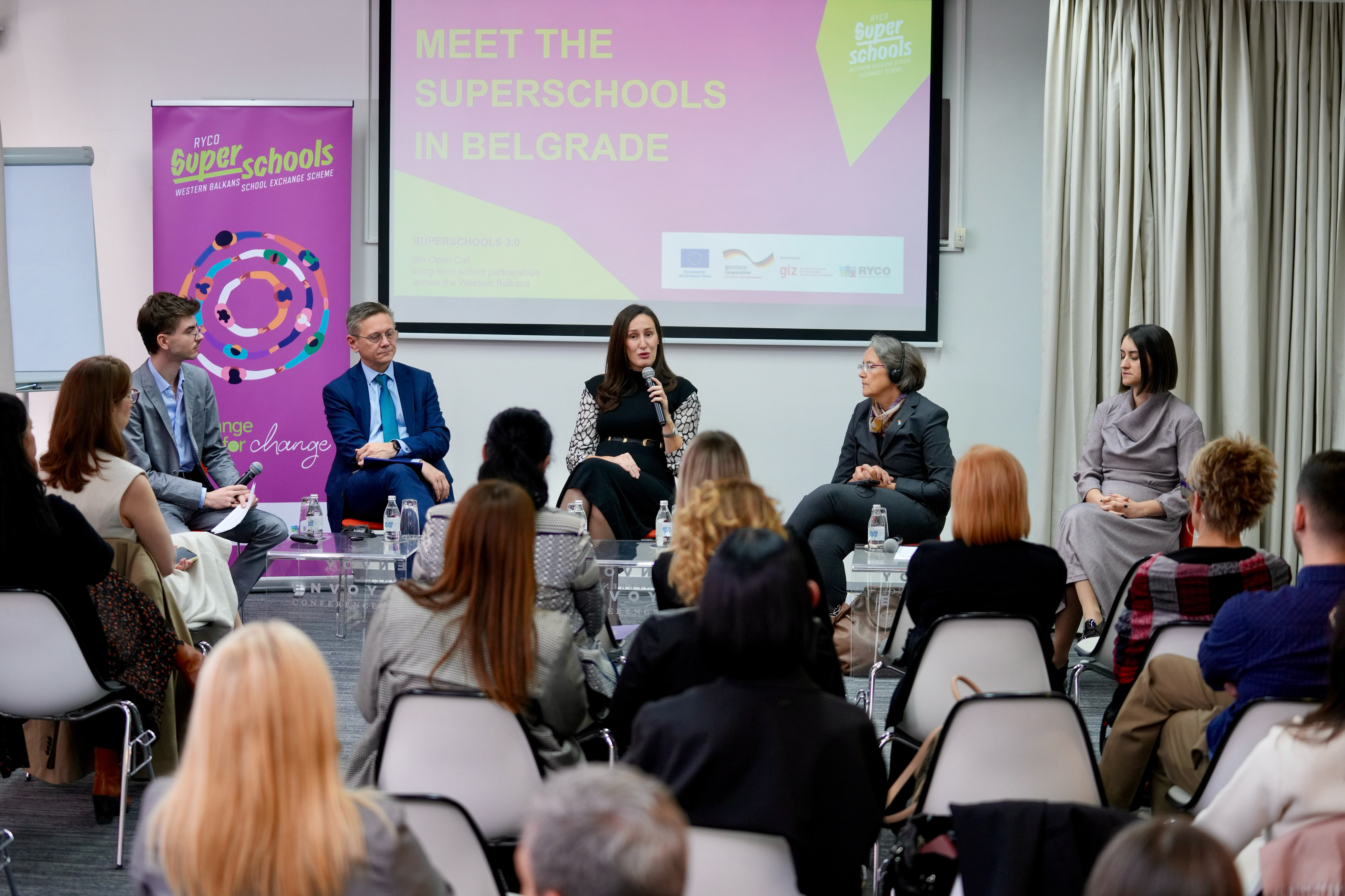
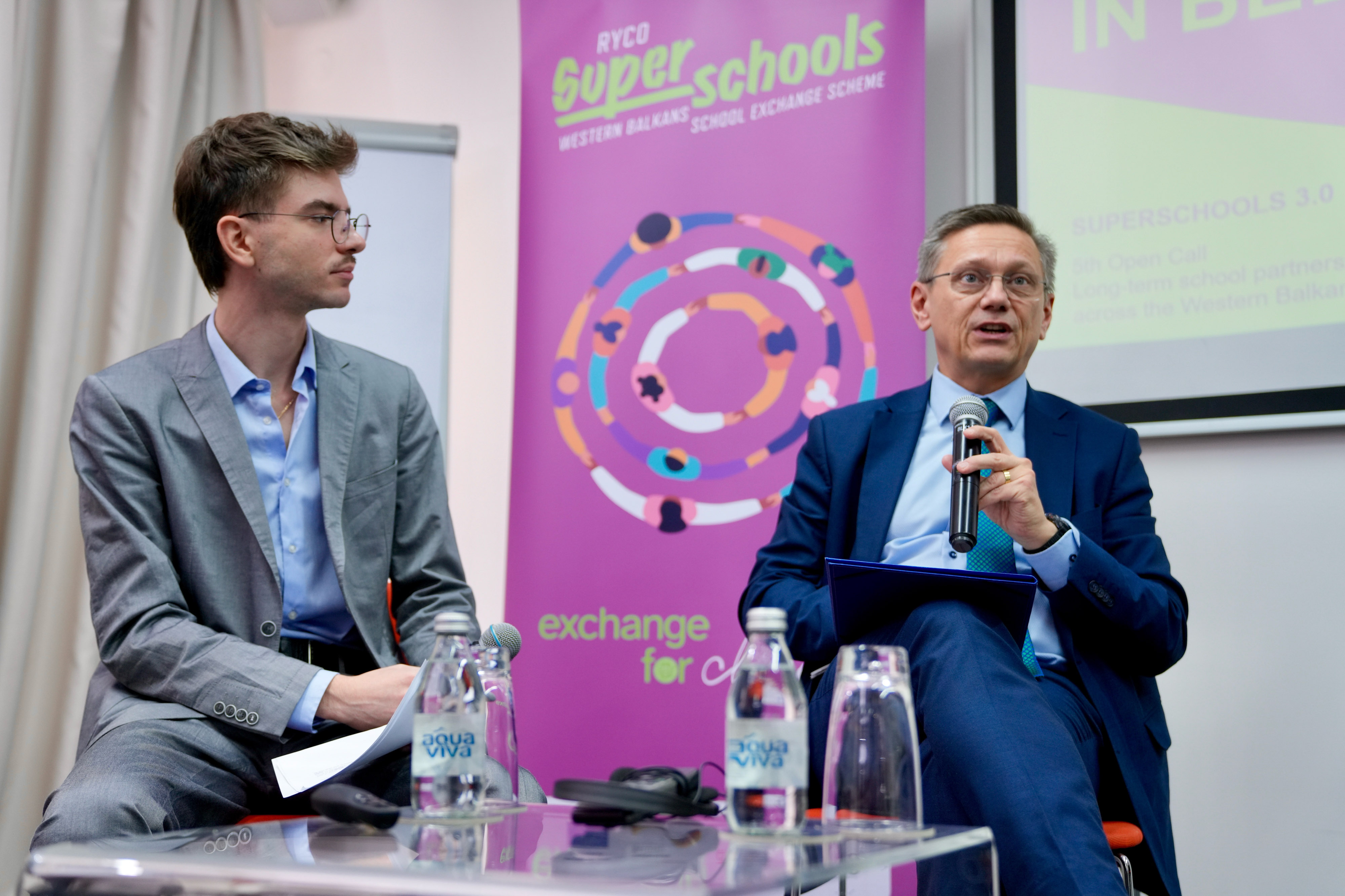
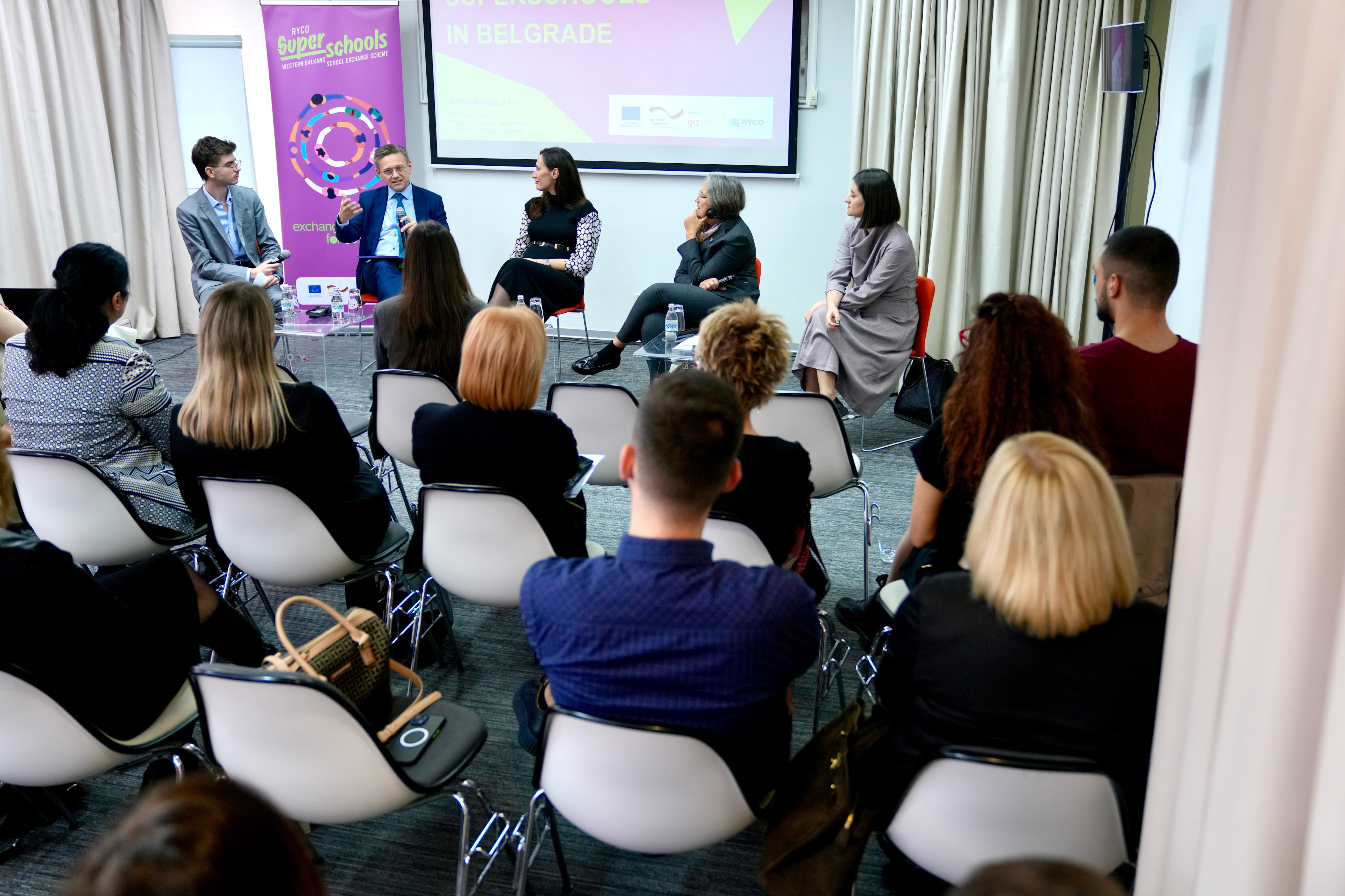
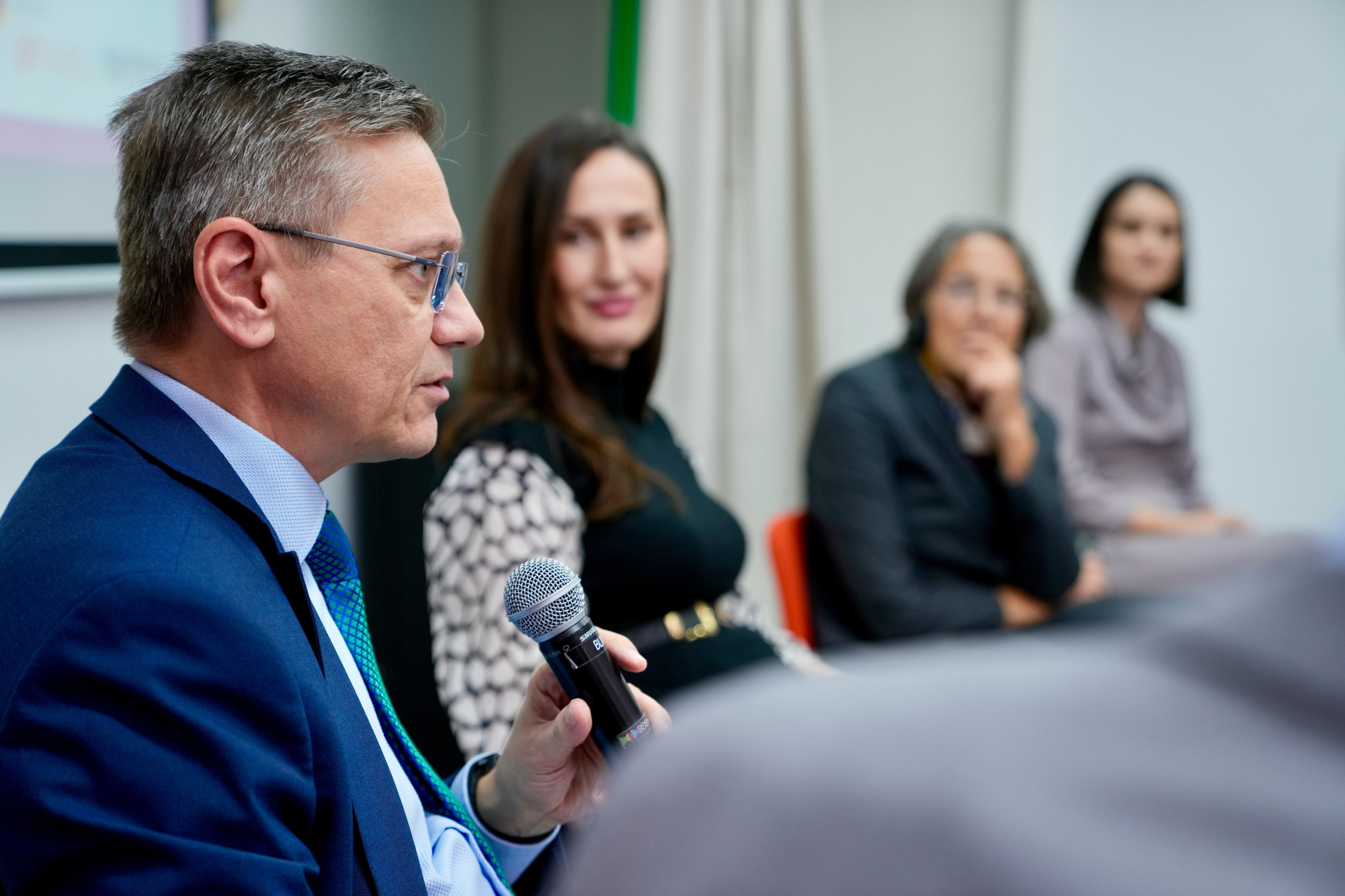
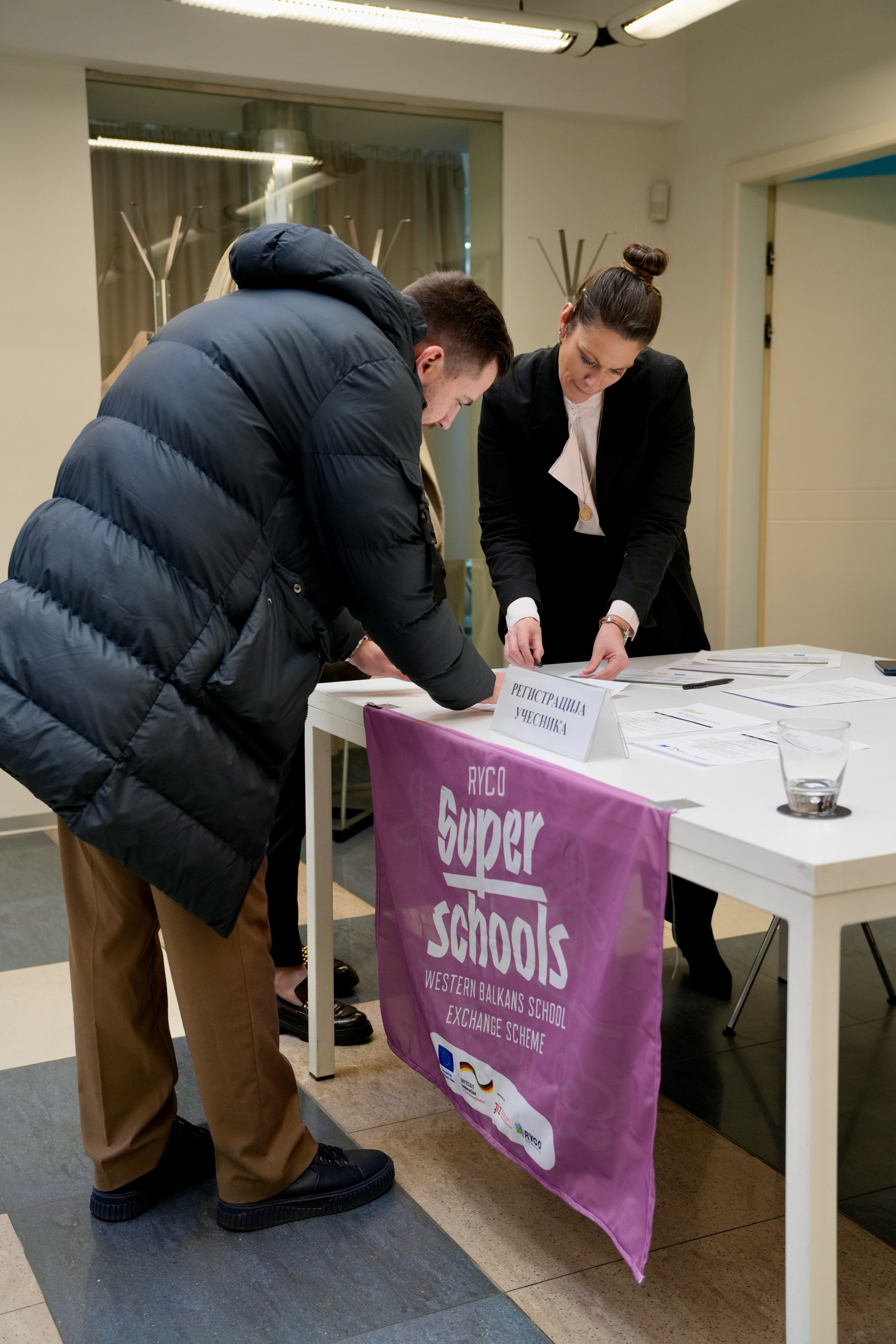
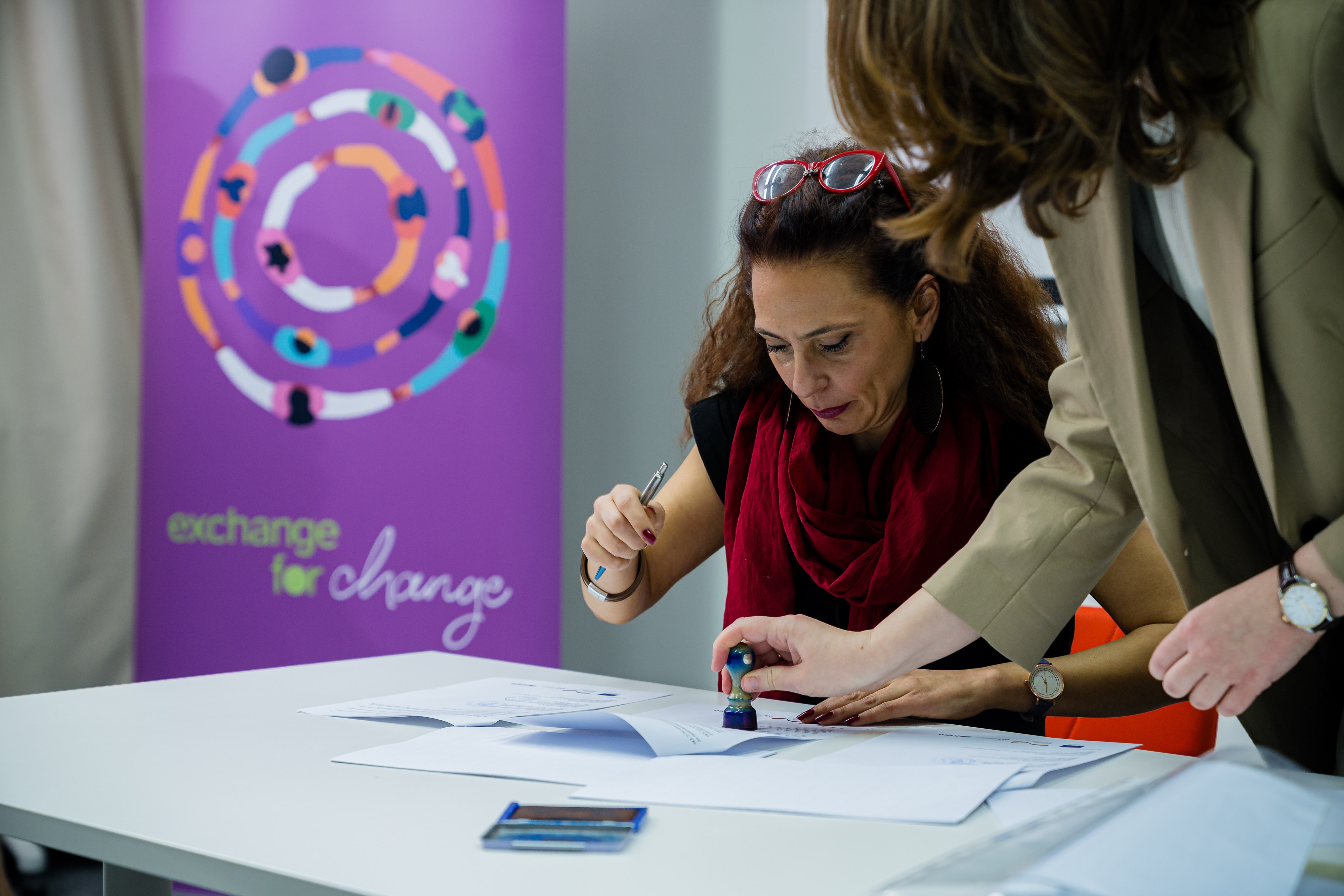
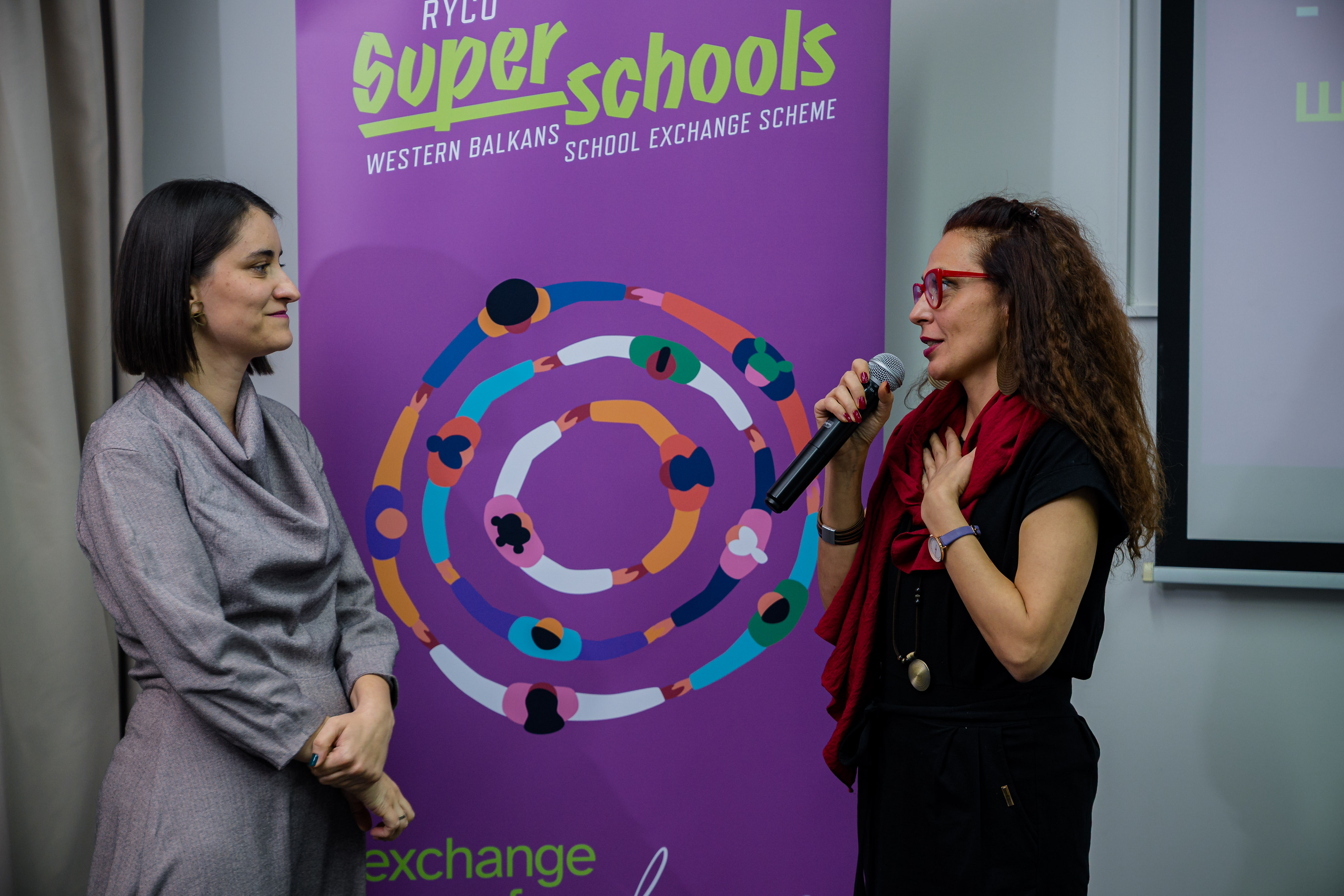
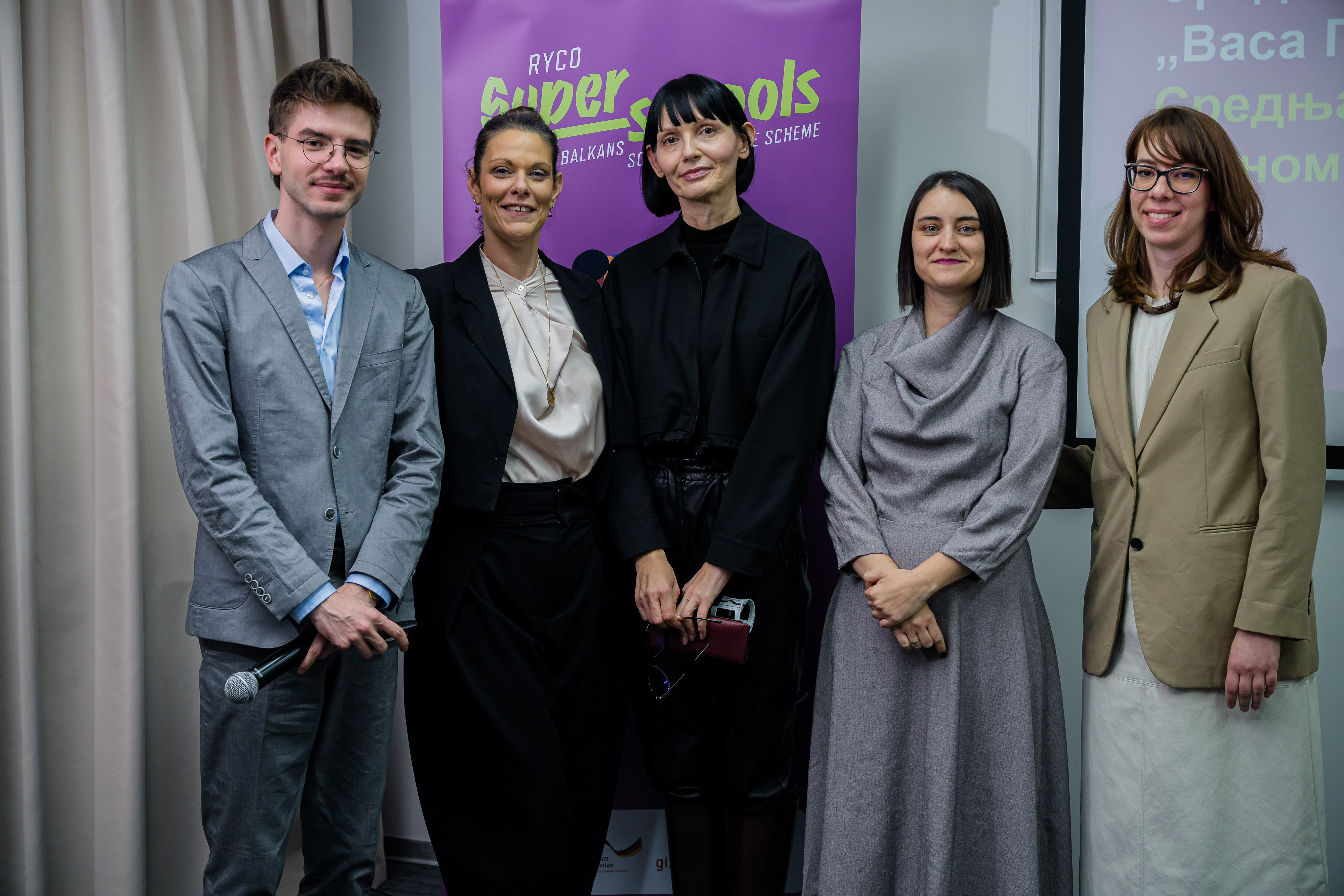
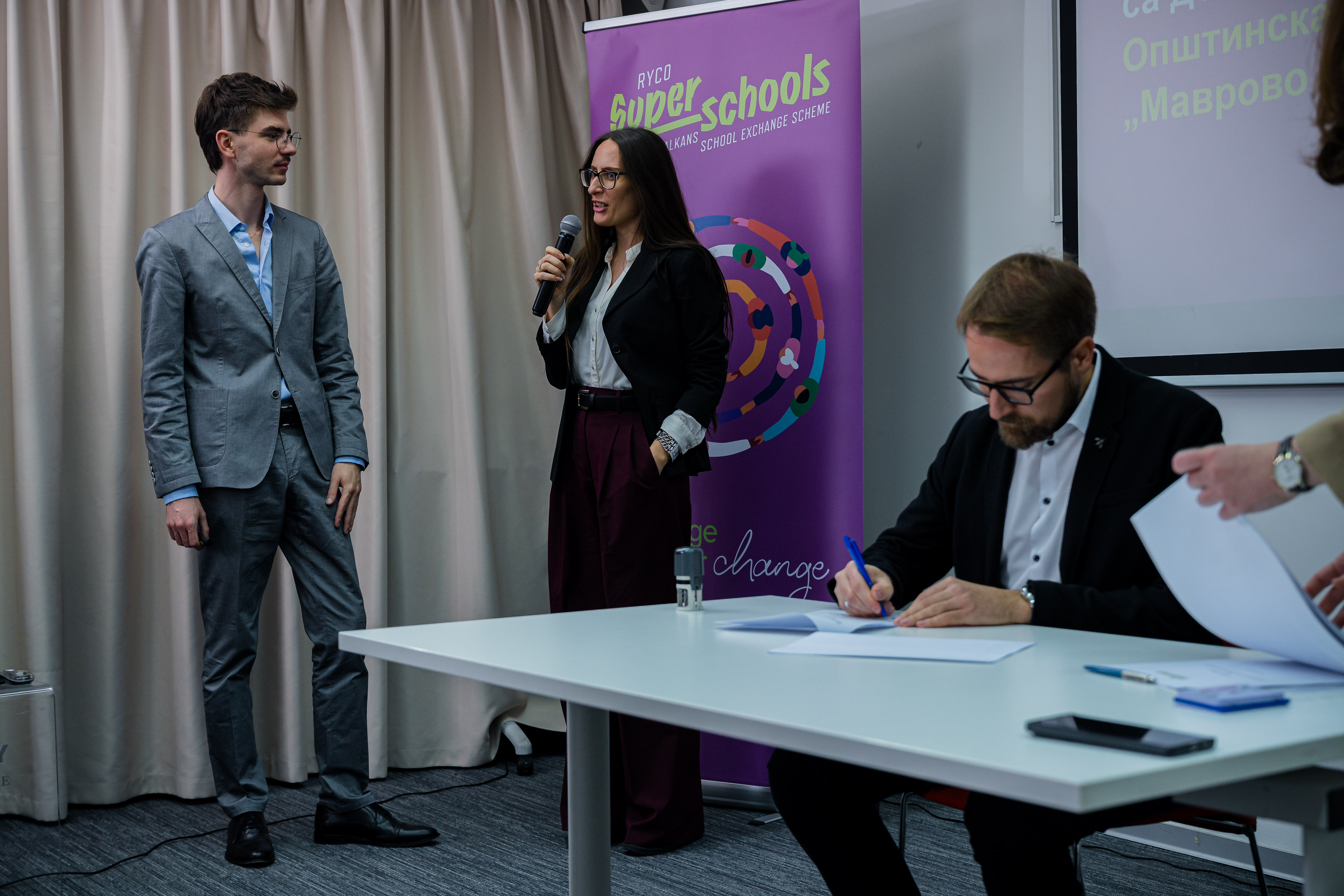
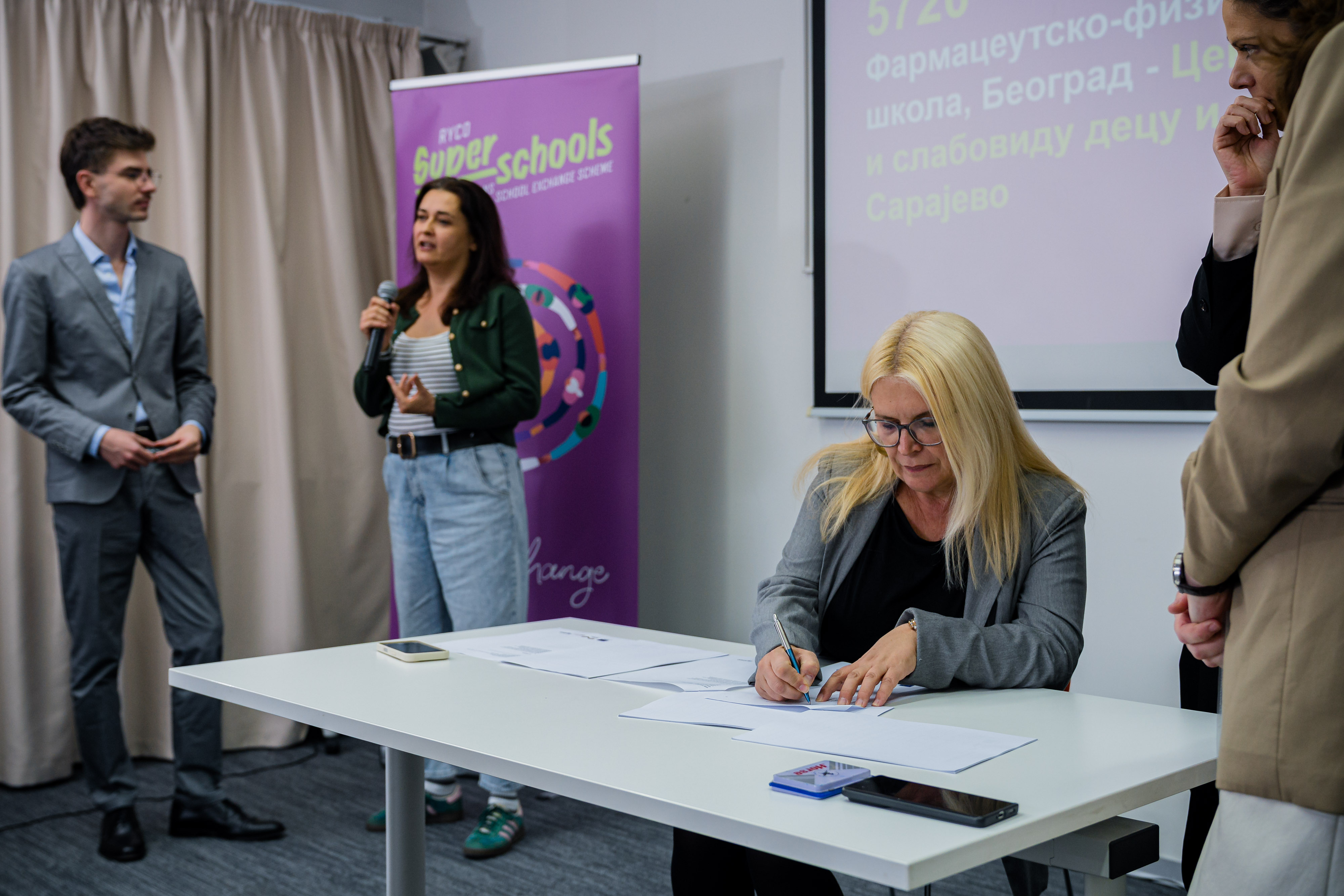
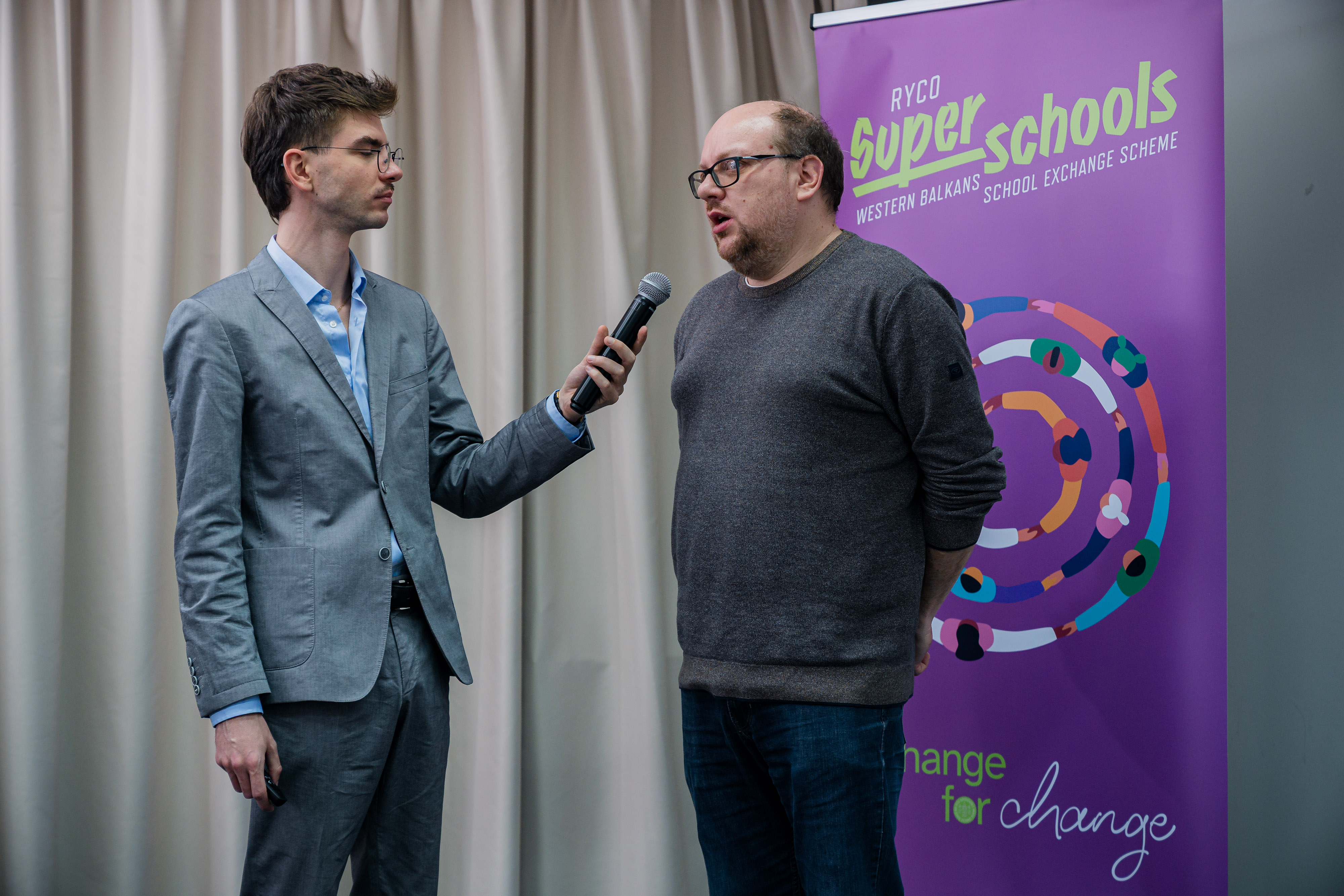
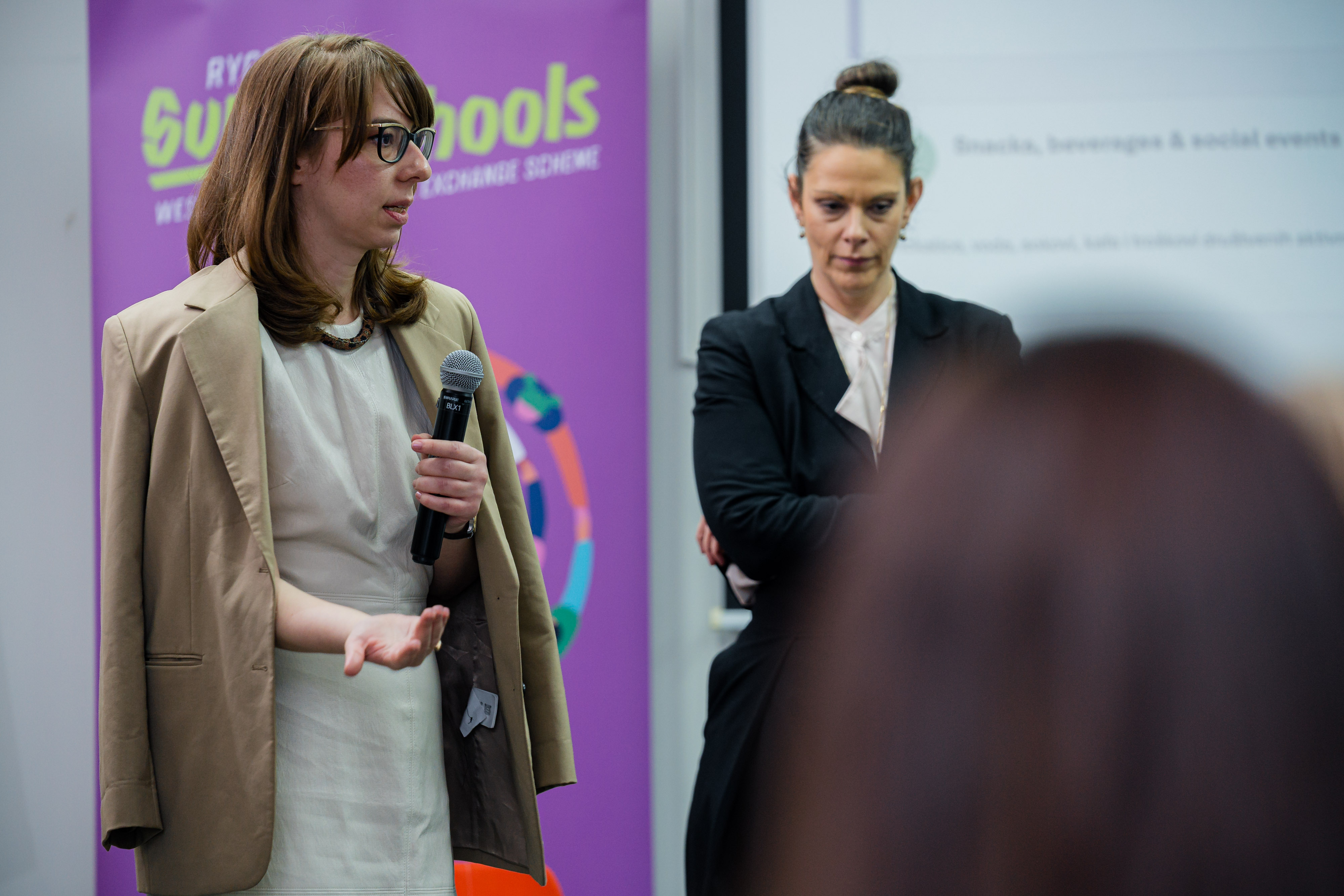
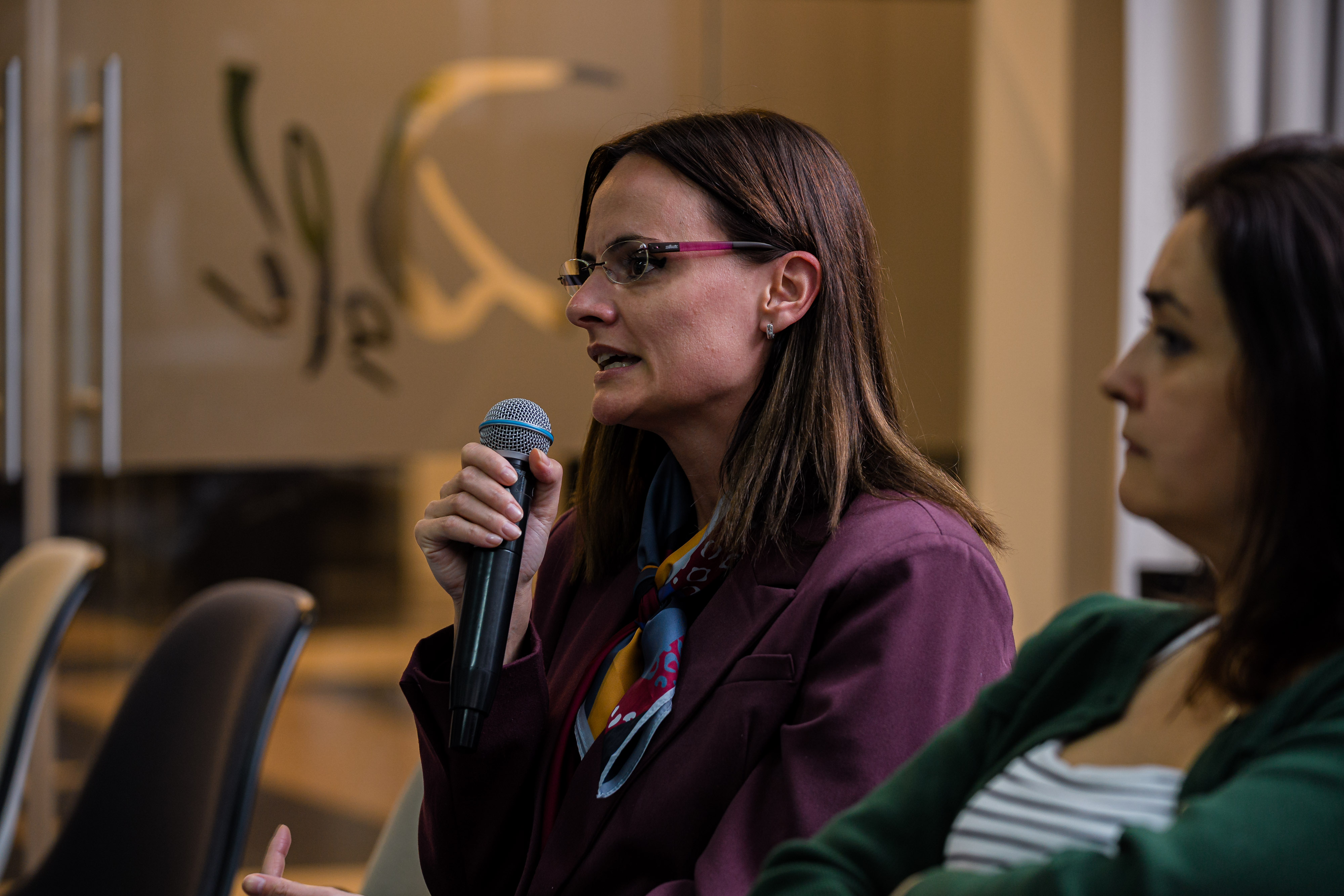
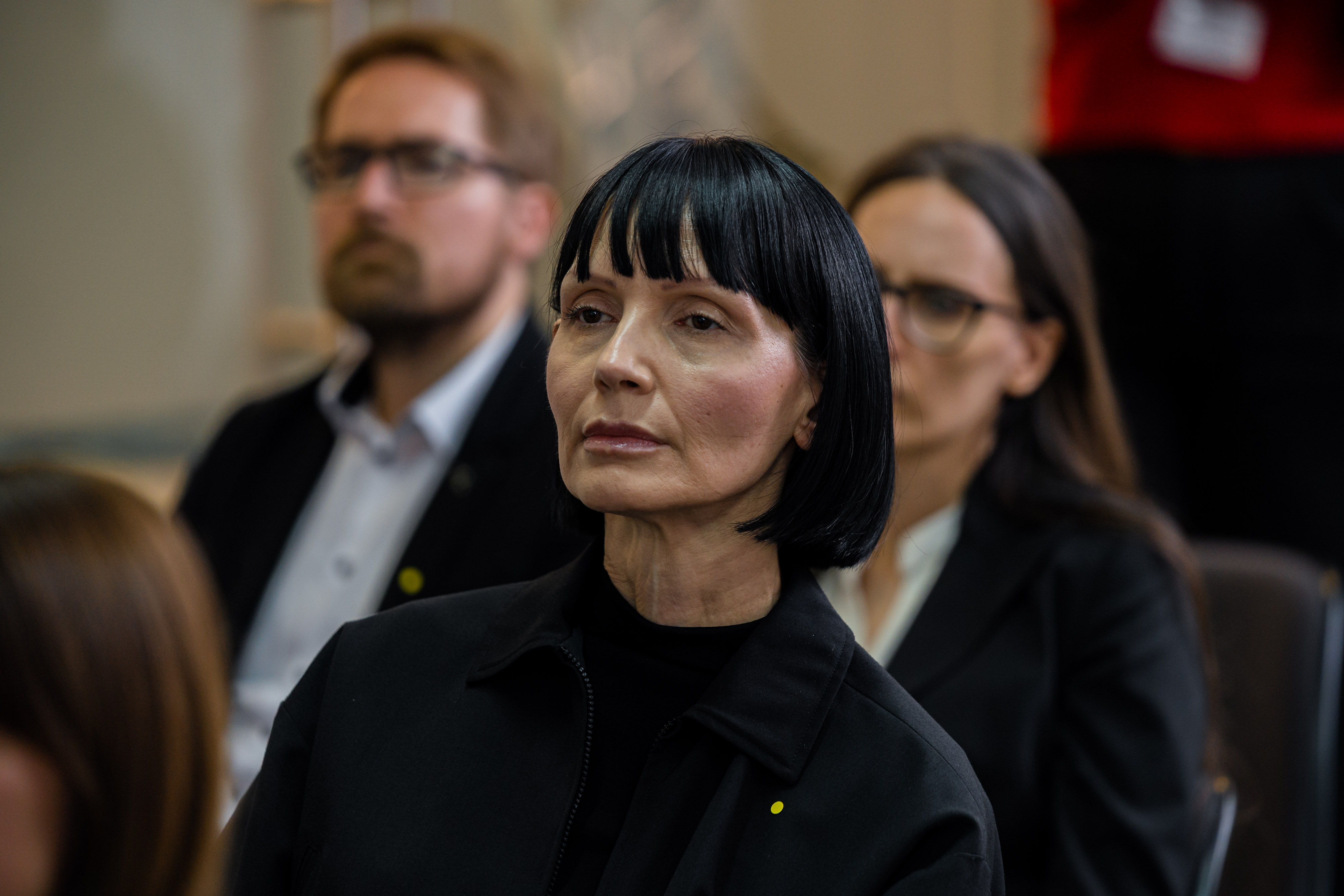
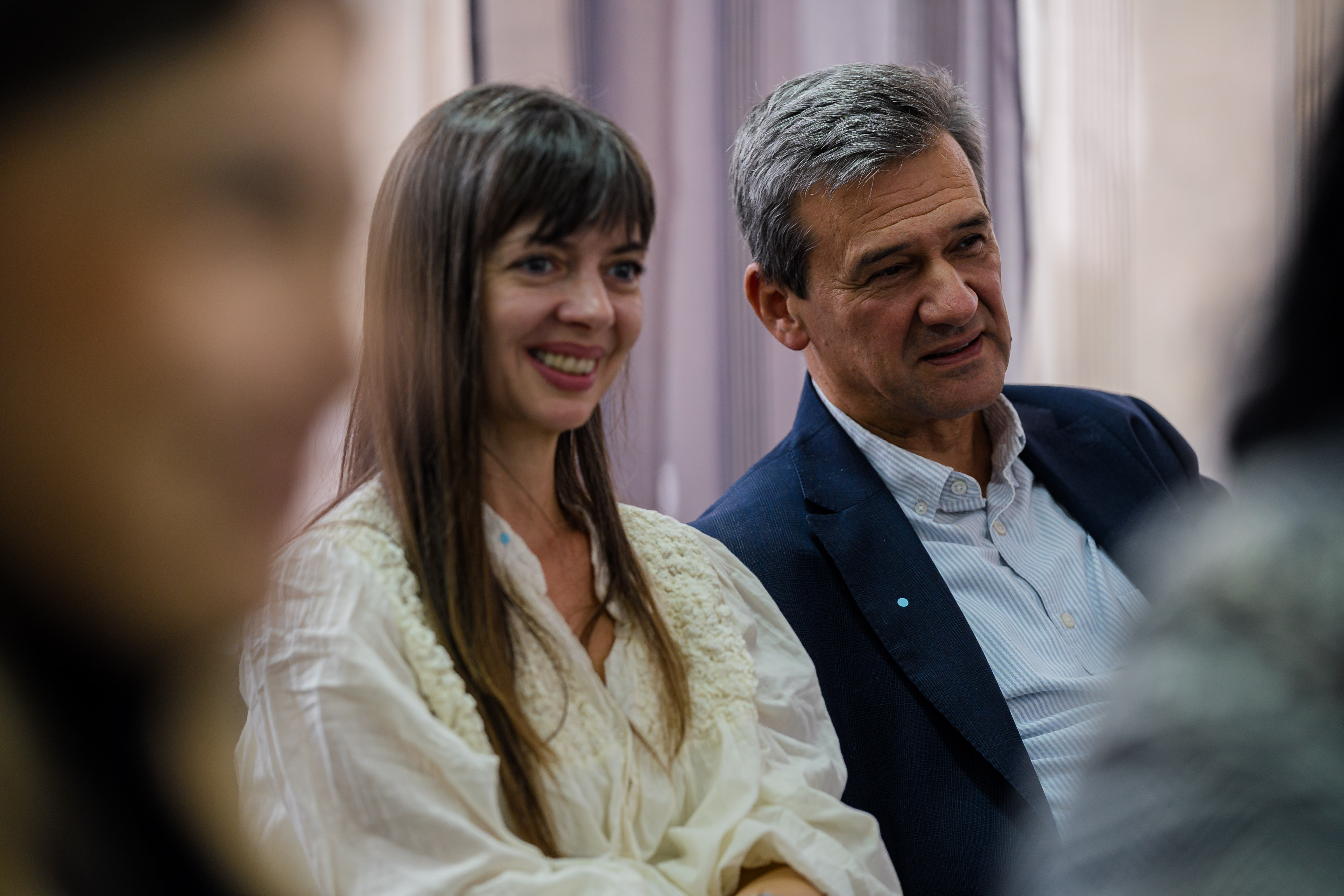
Selected schools presented their partnerships, joined direct conversations with institutional partners and signed Partnership Agreements under the 5th Superschools Open Call.
BELGRADE, 5 November 2026 – 14 secondary schools from Serbia, selected under the 5th Superschools Open Call, presented their regional partnerships and new project ideas during the “Meet the Superschools” event part of Superschools programme, an initiative co-funded by EU and the German Federal Ministry for Economic Cooperation and Development (BMZ and implemented by the Deutsche Gesellschaft für Internationale Zusammenarbeit (GIZ) together with the Regional Youth Cooperation Office (RYCO).
The selected schools are partnering with schools from Albania, Bosnia and Herzegovina, Montenegro and North Macedonia. Their joint projects use intercultural learning, non-formal education and cooperation between school communities to support dialogue, inclusion, peacebuilding and stronger connections among young people across the Western Balkans.
The 5th Open Call is part of Superschools 3.0, which aims to support 165 bilateral school partnerships involving 330 secondary schools and 660 teachers. These partnerships will implement 330 exchanges, engaging approximately 3,960 young people across four open calls. introducing the selected schools to the objectives, implementation approach and opportunities of the new project phase.
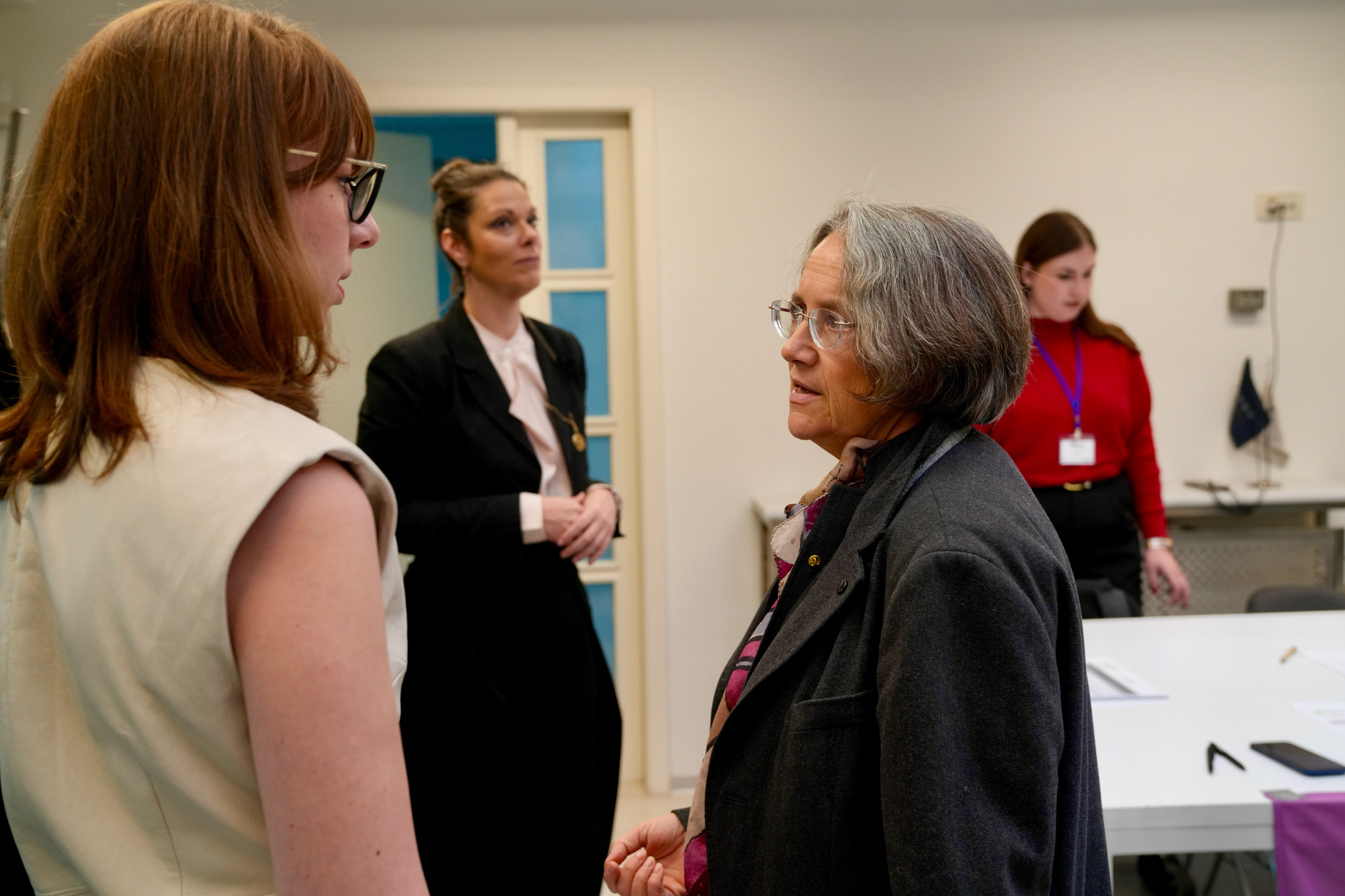
Representatives of the selected schools were joined by Richard Masa, Head of Operations II at the Delegation of the European Union to Serbia; Petra Stöckl, Head of the Cultural and Press Division at the Embassy of the Federal Republic of Germany in Serbia; Ivana Antonijević, Acting Assistant Minister of Tourism and Youth of the Government of the Republic of Serbia; Ivana Markulić Stanković, Acting Head of the RYCO Local Branch Office in Serbia; and other institutional partners.
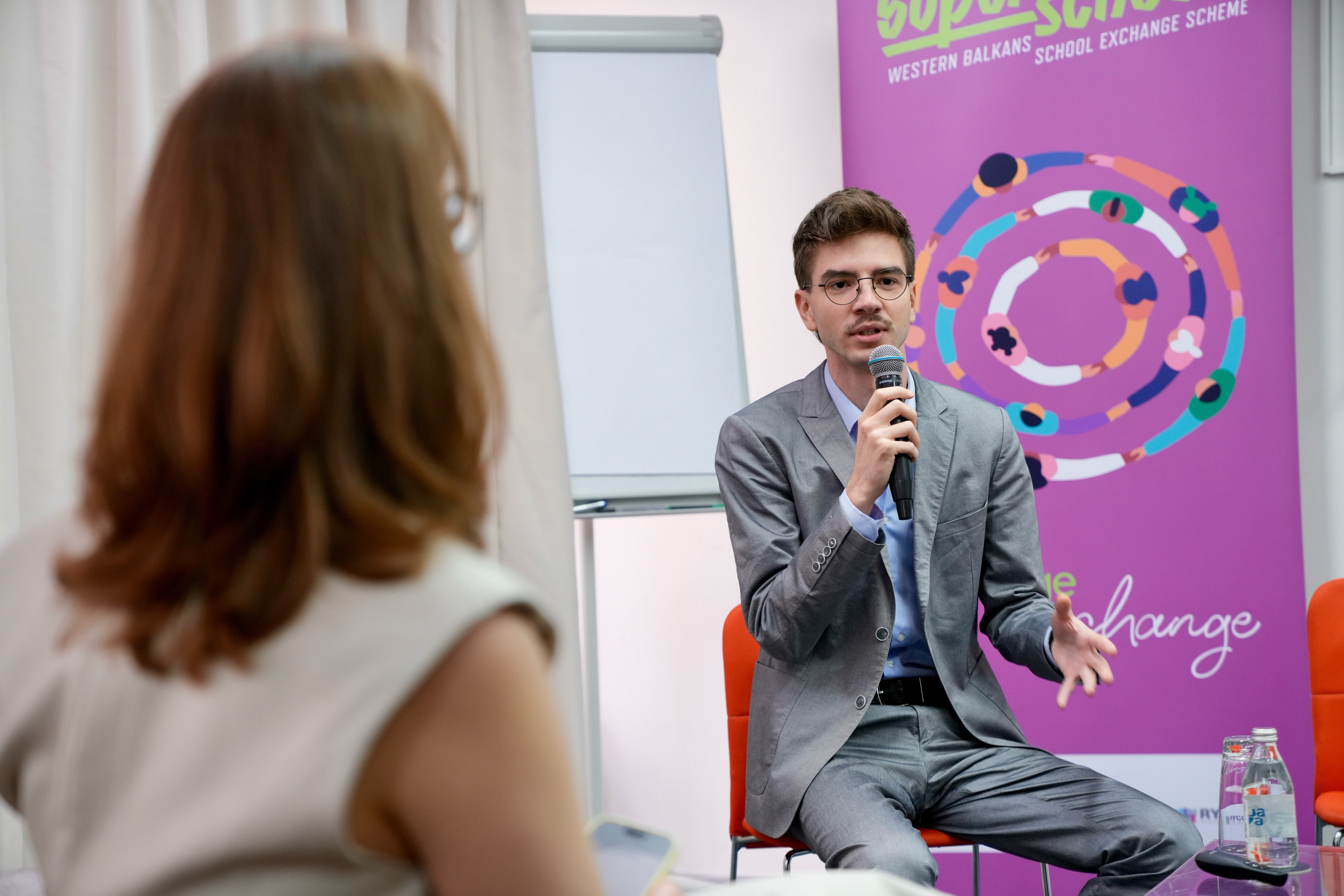
A conversation focused on schools and partnership
Institutional representatives discussed why the work of schools is important for peacebuilding and regional cooperation, why long-term support for Superschools matters, and what message should be sent to schools beginning the new project cycle.
“This project is an excellent example of regional cooperation because it fosters respect and empathy among young people. Schools are places where young people learn how to listen to one another, exchange views and build the future together. Investing in the future is not only about enabling physical exchanges, but also about creating a generation built on trust,” said Richard Masa, Head of Operations II at the Delegation of the European Union to Serbia.
“We owe a great deal of gratitude to teachers who work with young people every day and invest in their development. The Superschools programme gives young people opportunities to take part in exchanges and gain new experiences, while also empowering teachers by strengthening their capacities. Investing in reconciliation is a marathon through which we build a generation of young people who are open to other cultures and ready to actively participate in decisions that affect their lives,” emphasised Ivana Antonijević, Acting Assistant Minister of Tourism and Youth of the Government of the Republic of Serbia.
“If the Superschools programme did not exist, we would have to invent it. Reconciliation does not mean forgetting the past but confronting it and building mutual understanding. The best way to create a peaceful environment among neighbours is to ensure that young people get to know one another, connect and learn from each other from an early age,” said Petra Stöckl, Head of the Cultural and Press Division at the Embassy of the Federal Republic of Germany in Serbia.
“The greatest strengths of schools from Serbia are their resilience and perseverance. Despite numerous challenges and uncertain circumstances, none of the schools involved in the programme has allowed its students to miss the opportunity to meet their peers from across the region, learn from one another and build lasting friendships. This commitment clearly demonstrates just how important such encounters are for young people and their communities,” highlighted Ivana Markulić Stanković, Acting Head of the RYCO Local Branch Office in Serbia.
Projects involving schools from Serbia include “Rebuilding Bridges”, “The Amazing Experience of Being an Exchange Student”, “Be the Change You Want to See”, “A Bridge Connecting Two Lakes”, “The Same Goal Can Be Accomplished in Different Ways”, “Designing Destinations, Connecting Cultures”, “Roots of Friendship beyond Borders”, “Growing Connections – Growing Together, Connecting Communities”, “Beyond Peace – Building the Future Together”, “Beyond Sight, Beyond Borders”, “We Build Friendships – We Build Communities”, “Bridge of Friendship”, “Ideas in Motion”, and “E-Motion through Unity”.
FULL LIST OF SELECTED SCHOOLS CAN BE FOUND HERE
RYCO congratulates the selected schools and looks forward to supporting them as they transform their project ideas into meaningful learning experiences for students, teachers and school communities.