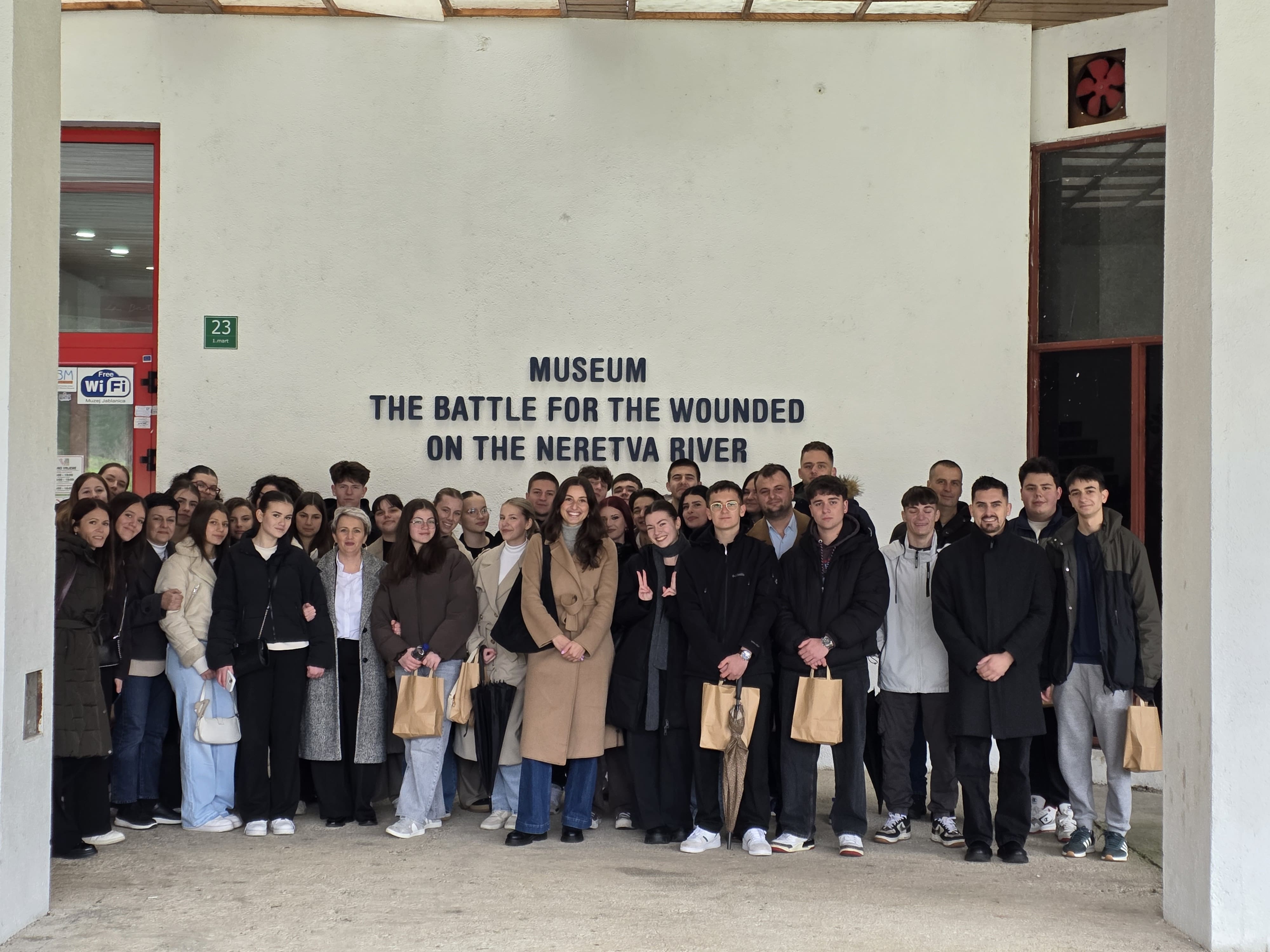
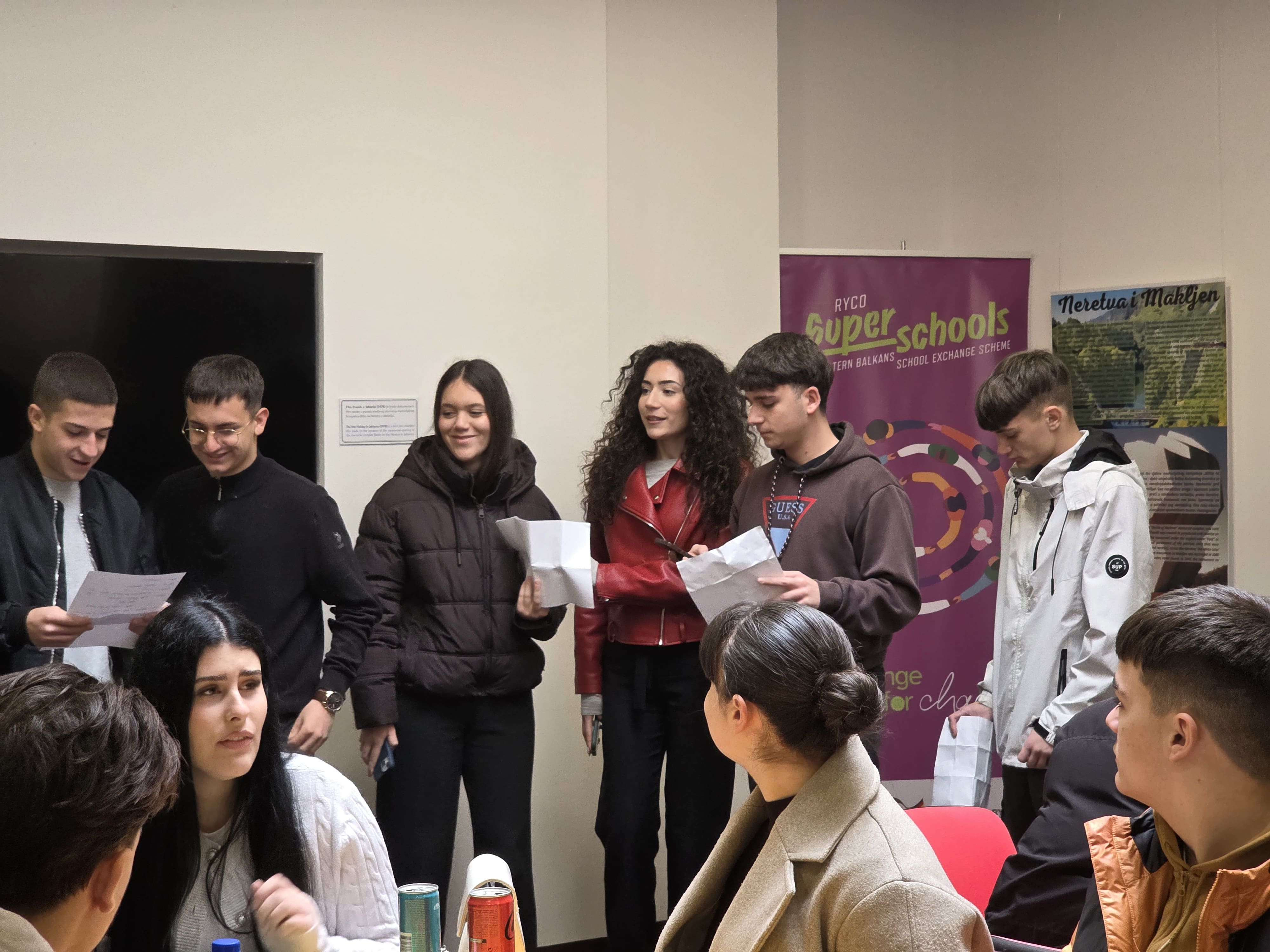
A high-level visit was organized to one of the awarded Superschools exchange programs, implemented as part of the second cycle of this regional initiative, connecting High School Jablanica and High School “Josif Josifovski” Gevgelija. The visit gathered representatives of the European Union Delegation to Bosnia and Herzegovina, the Embassy of the Federal Republic of Germany in Bosnia and Herzegovina, and the Regional Youth Cooperation Office (RYCO).
This visit served as an opportunity to present the ongoing student exchange between the two schools and to emphasize the importance of engaging young people in intercultural dialogue, fostering mutual understanding, and building meaningful and lasting connections across the region.
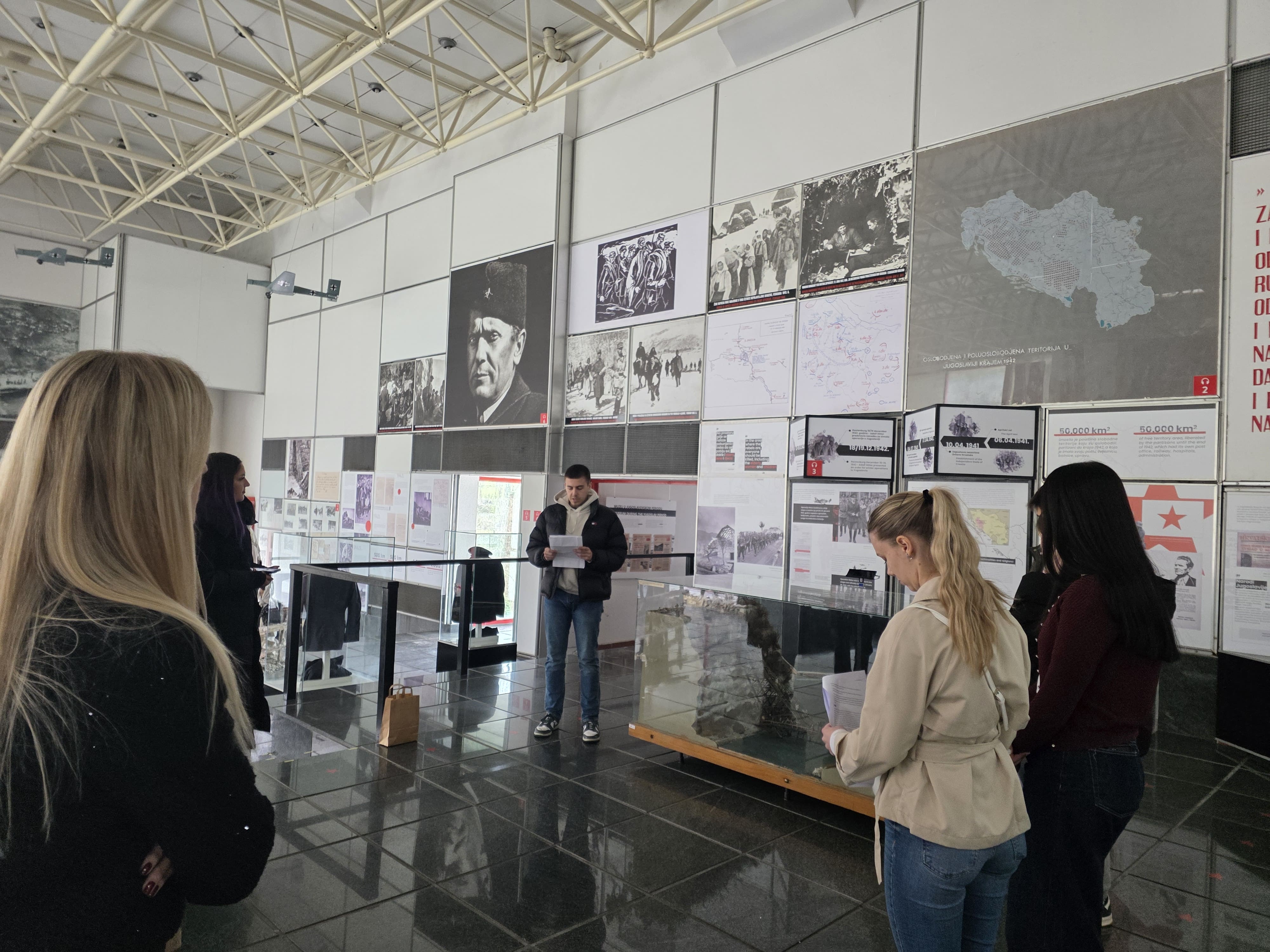
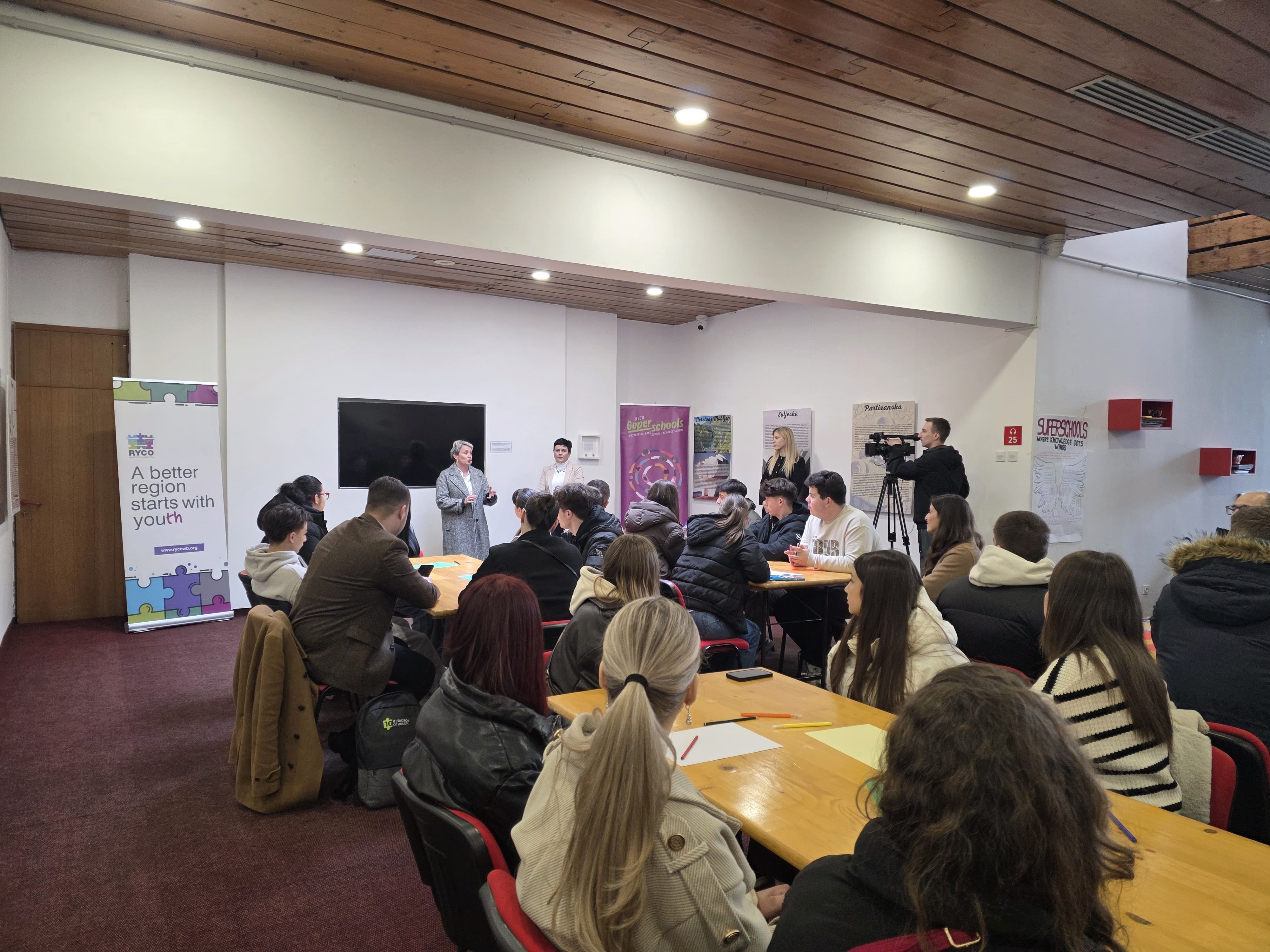
During the exchange, students from Gevgelija stayed in Jablanica, where they participated in a series of educational activities and interactive workshops designed to strengthen their cooperation and broaden their perspectives. As part of the official visit, representatives attended a workshop facilitated by the teachers’ coordinators and students from both Jablanica and Gevgelija, focusing on themes of identity, diversity, and peacebuilding. The workshop encouraged students to reflect on migration topics and explore similarities and differences in their local contexts, followed by a tour of the Museum of the Battle of the wounded led by the Superschools students themselves.
Fermin Cordoba, Policy officer at the Delegation of the European Union to Bosnia and Herzegovina, gave a reflection on the role of identity in our everyday lives and peacebuilding as such,
Different identities exist all around us, and it is essential that we explore and understand them. Programmes like Superschools offer a unique opportunity to experience diversity firsthand, while building meaningful connections and discovering the similarities that bring us closer together
Renata Rat, Head of Press, Culture and Protocol, Embassy of the Federal Republic of Germany, reflected on the role of exchanges in building relationships,
Having taken part in a school exchange myself, I truly understand the value of meeting new people and experiencing different perspectives for the first time. On behalf of Germany, I would like to express strong support for Superschools and hope this experience will be just as transformative for each of you.
Nikola Kandić, Head of local branch office of RYCO in Bosnia and Herzegovina, reflected on the role of RYCO and said:
I truly hope that during your time here, you have experienced the warmth of Herzegovinian hospitality, enjoyed our culture, and tasted our food. These are small but meaningful ways we connect with each other. I also hope that this exchange brings our cities and the people who live in them closer, day by day. Because in the end, it is these personal connections, these friendships, that make our region stronger and more united.
Azra Mehmedović, Young European Ambassador from Bosnia and Herzegovina, stated the following:
Witnessing the collaboration between students from Bosnia and Herzegovina and North Macedonia was a powerful reminder of how much we can achieve through dialogue. From the inspiring speeches by the EU and German delegations to the student-led workshops, the energy was all about peacebuilding and human rights.
The Superschools program enables students from different local communities to take part in six-day exchanges, during which they engage in joint activities that promote intercultural dialogue, exchange experiences, and contribute to peacebuilding efforts in the region. Through direct interaction and shared learning, the program empowers young people to develop tolerance, openness, and a deeper understanding of diverse perspectives.
Superschools is a RYCO program for school exchanges in the Western Balkans. Its objectives are to support peacebuilding, reconciliation, and intercultural learning and dialogue among schools, students, and their communities. The program is part of the multi-donor project “Western Balkans School Exchange Scheme,” co-financed by the European Union and the German Federal Ministry for Economic Cooperation and Development (BMZ), and implemented by the Deutsche Gesellschaft für Internationale Zusammenarbeit (GIZ) together with the Regional Youth Cooperation Office (RYCO).