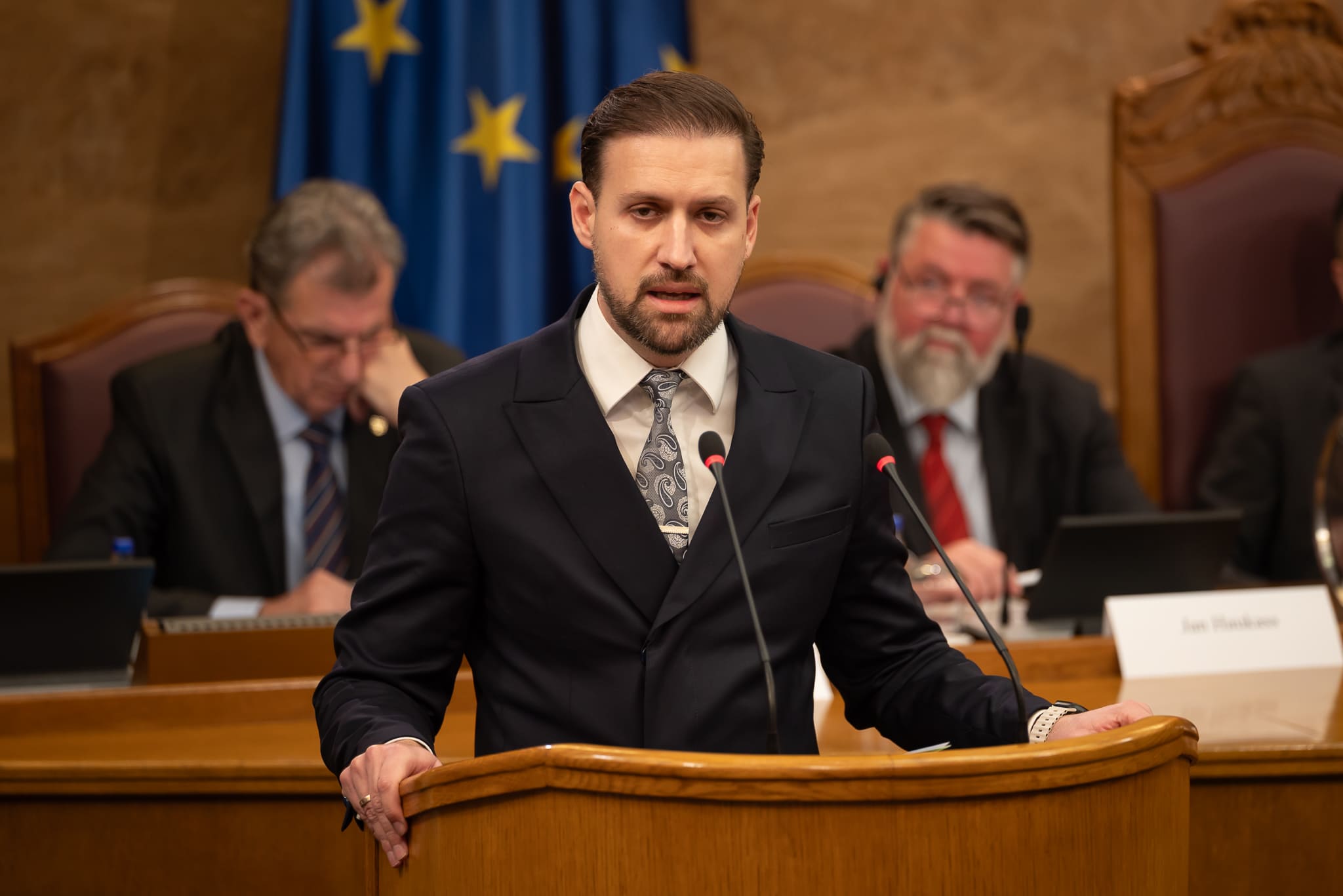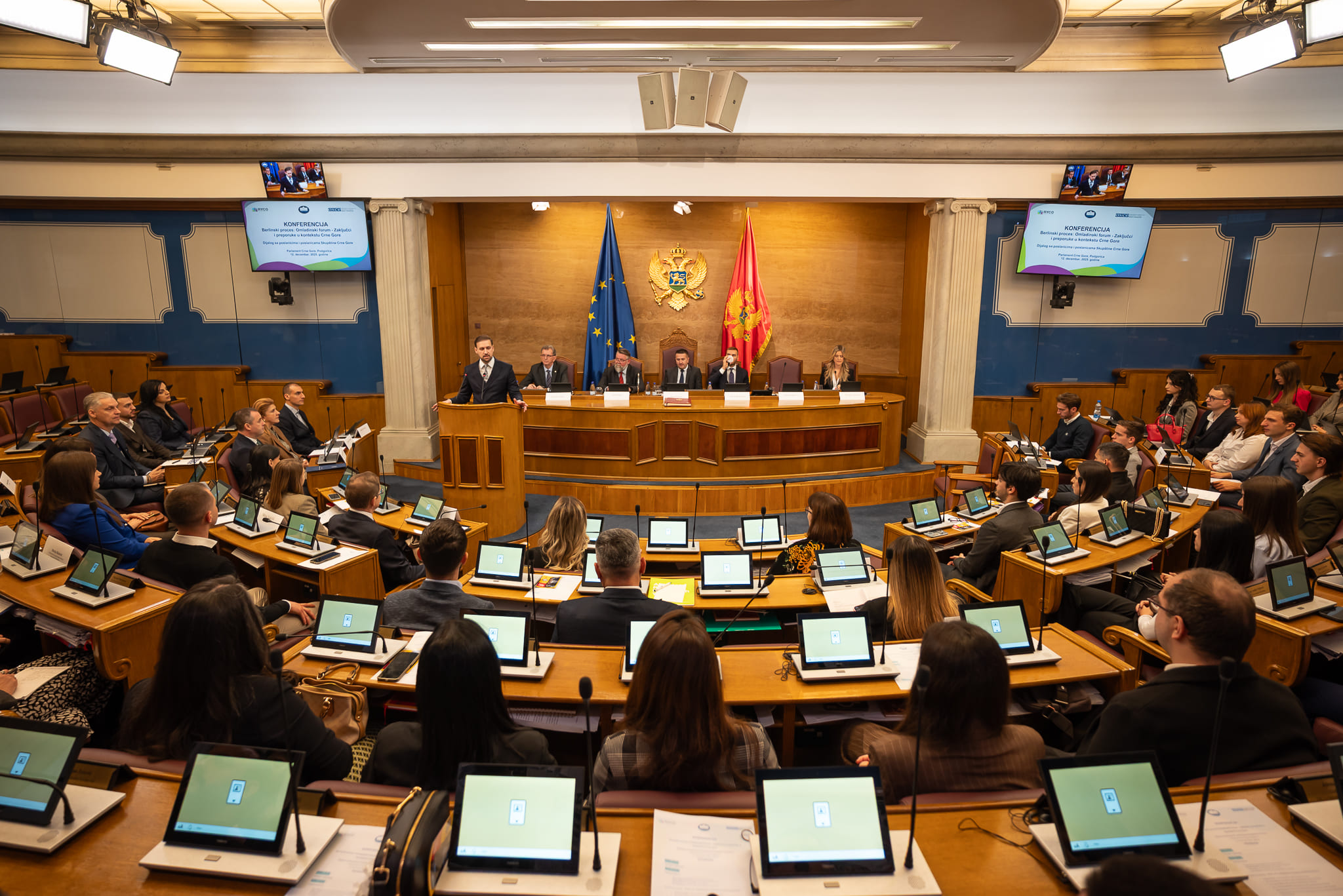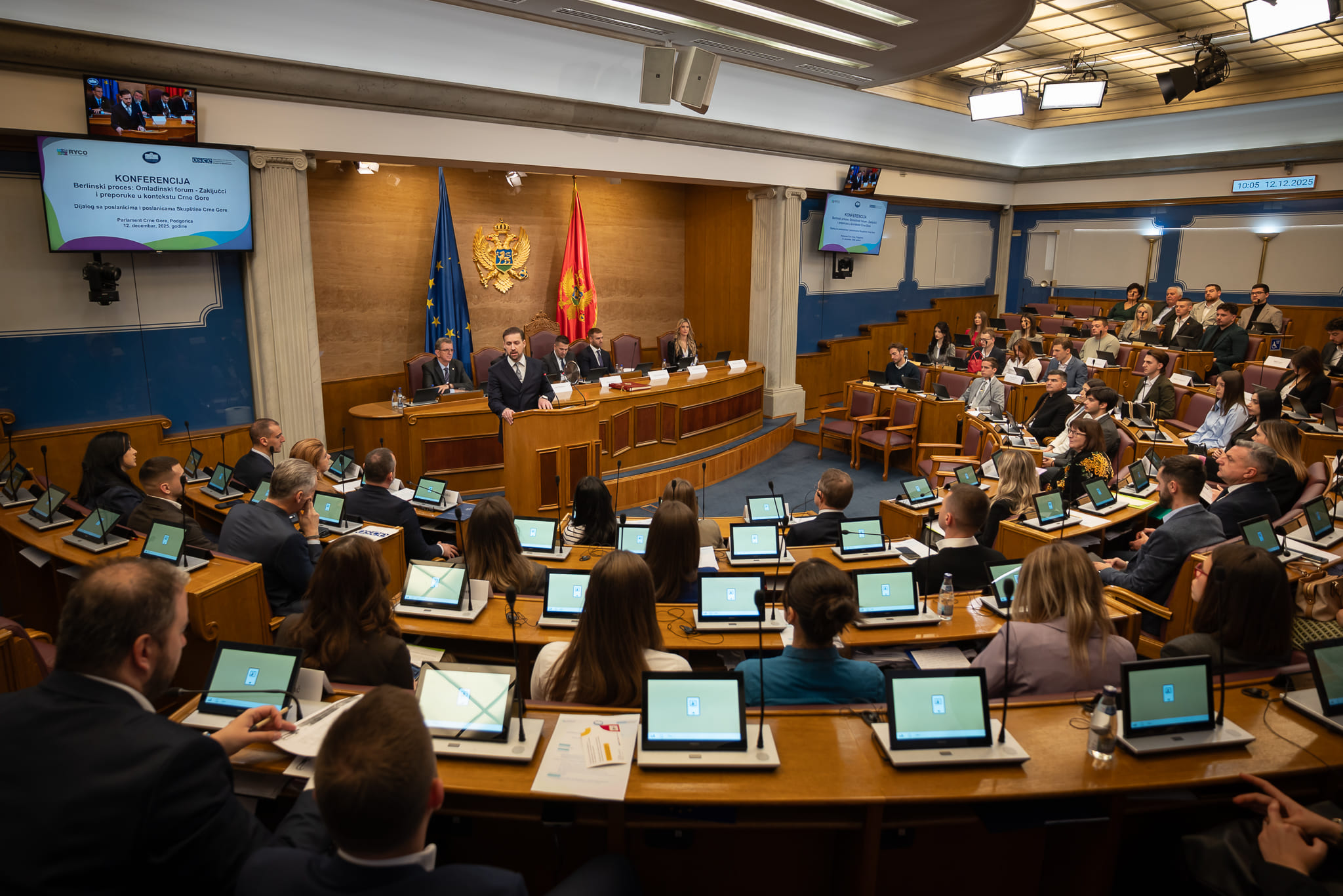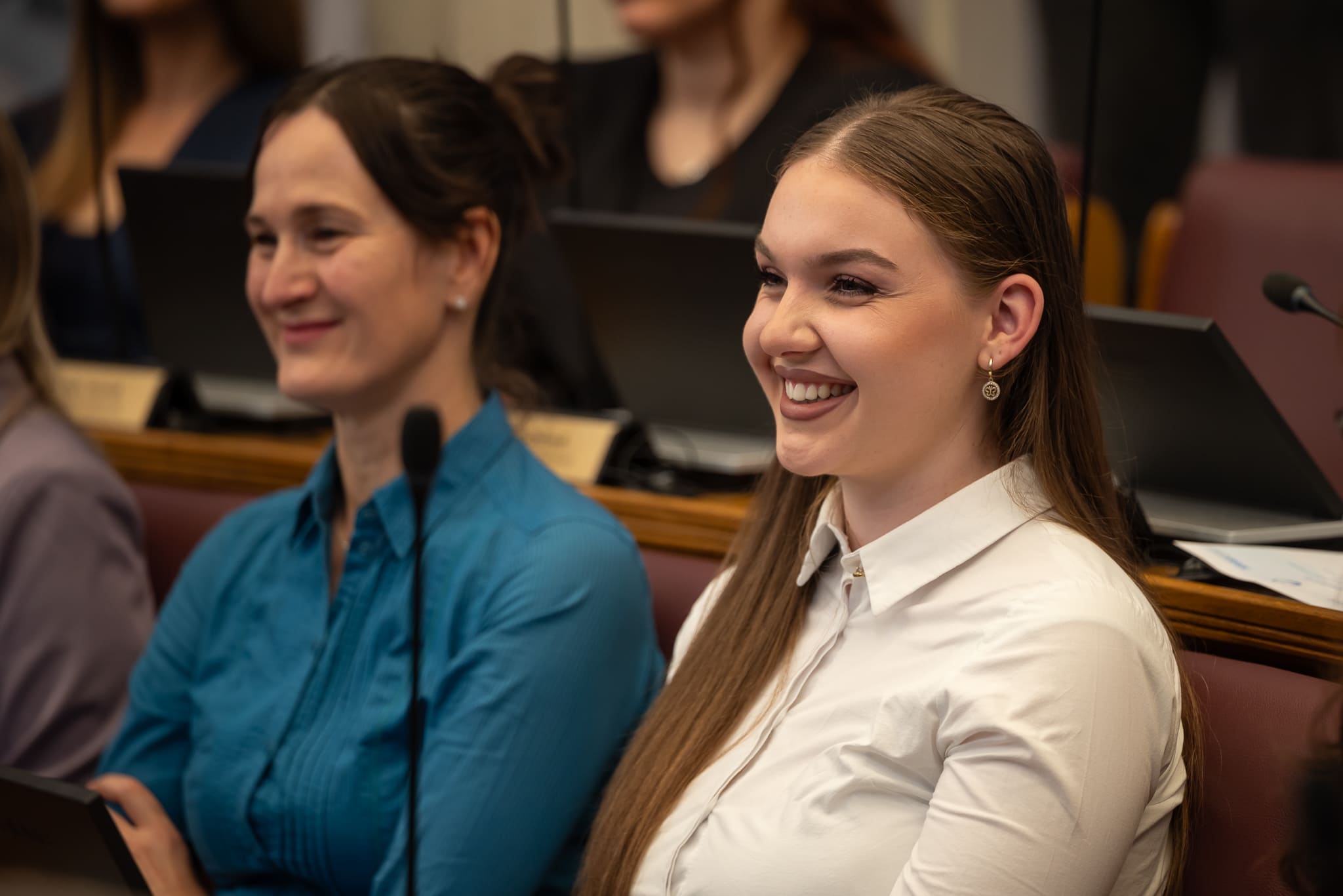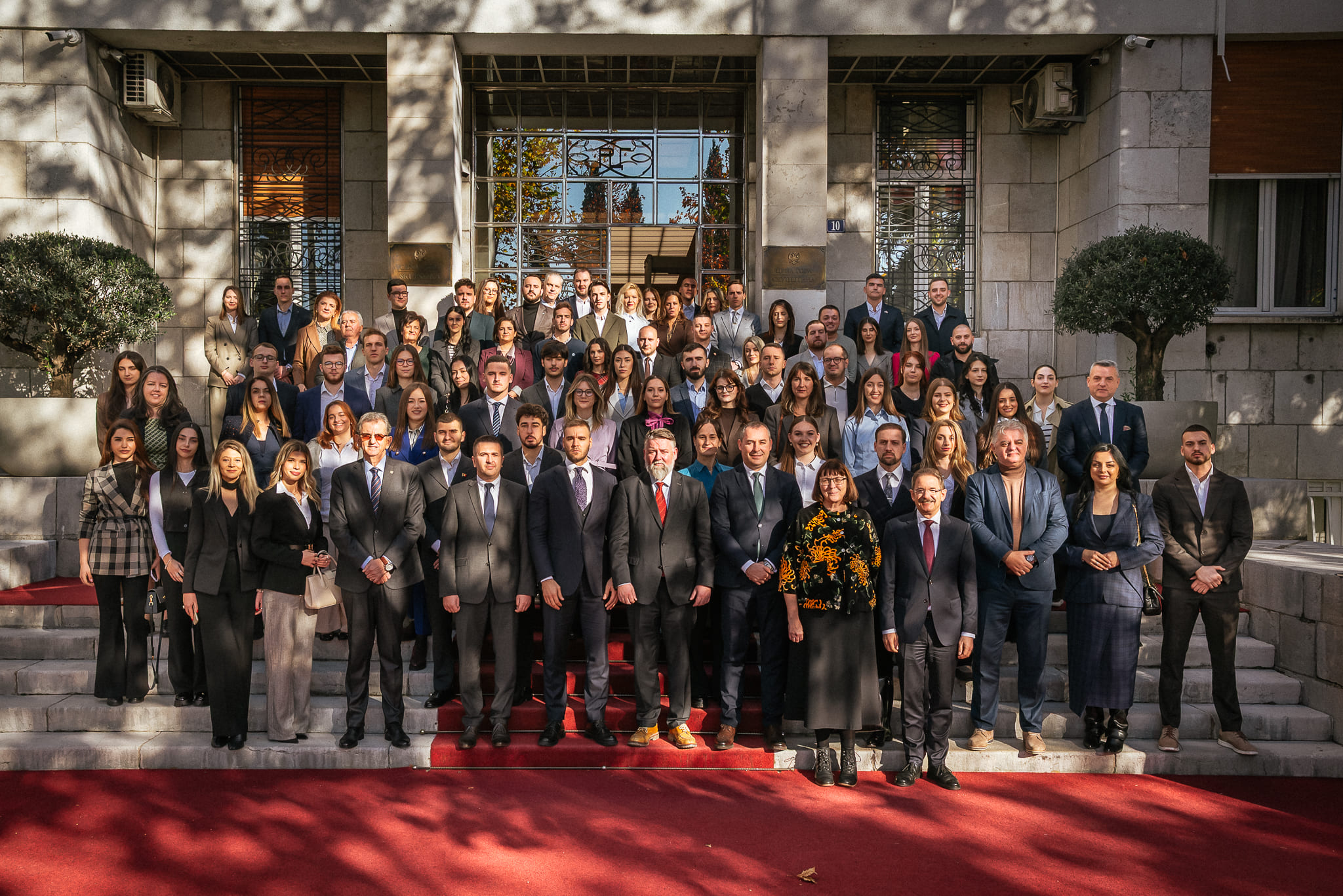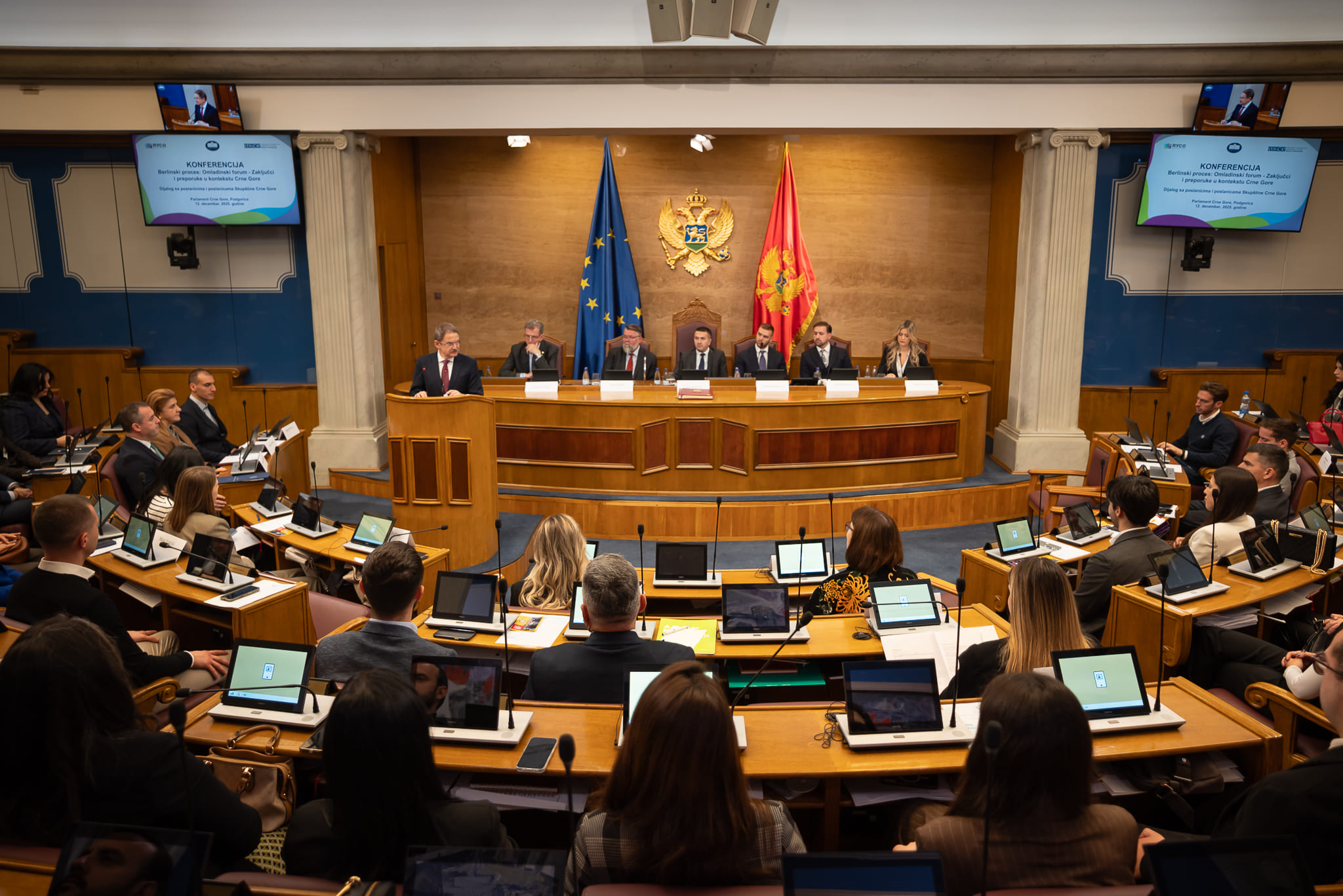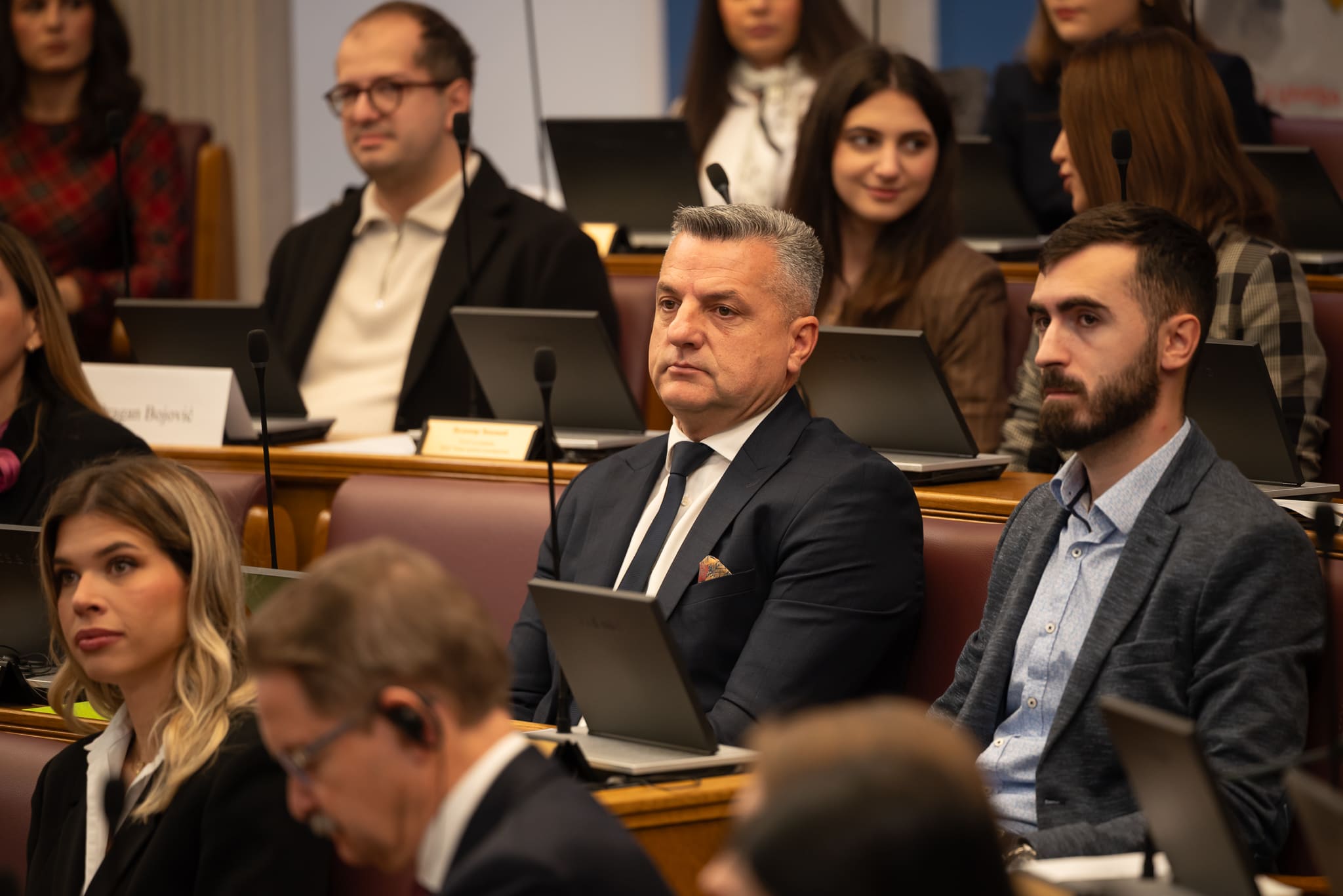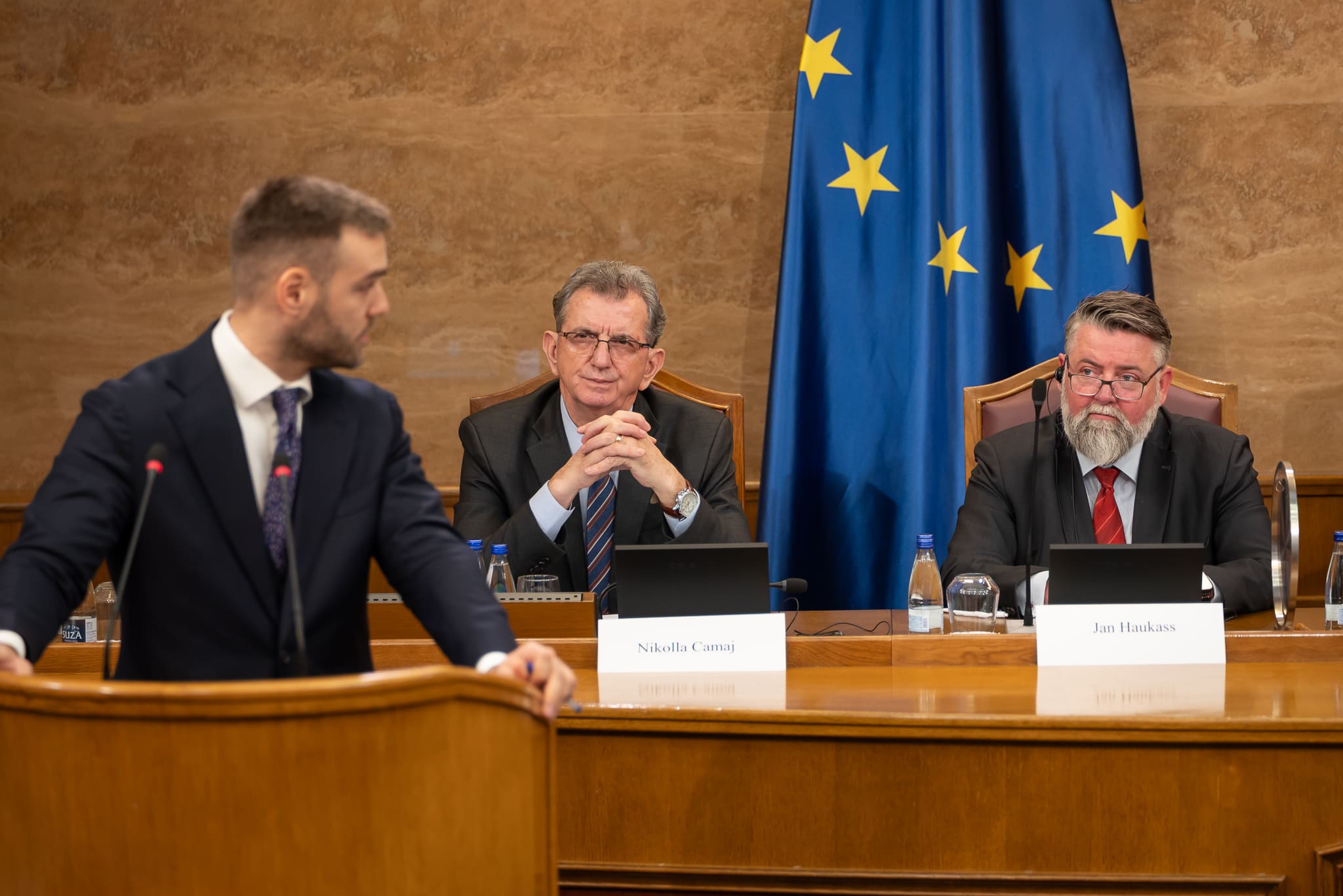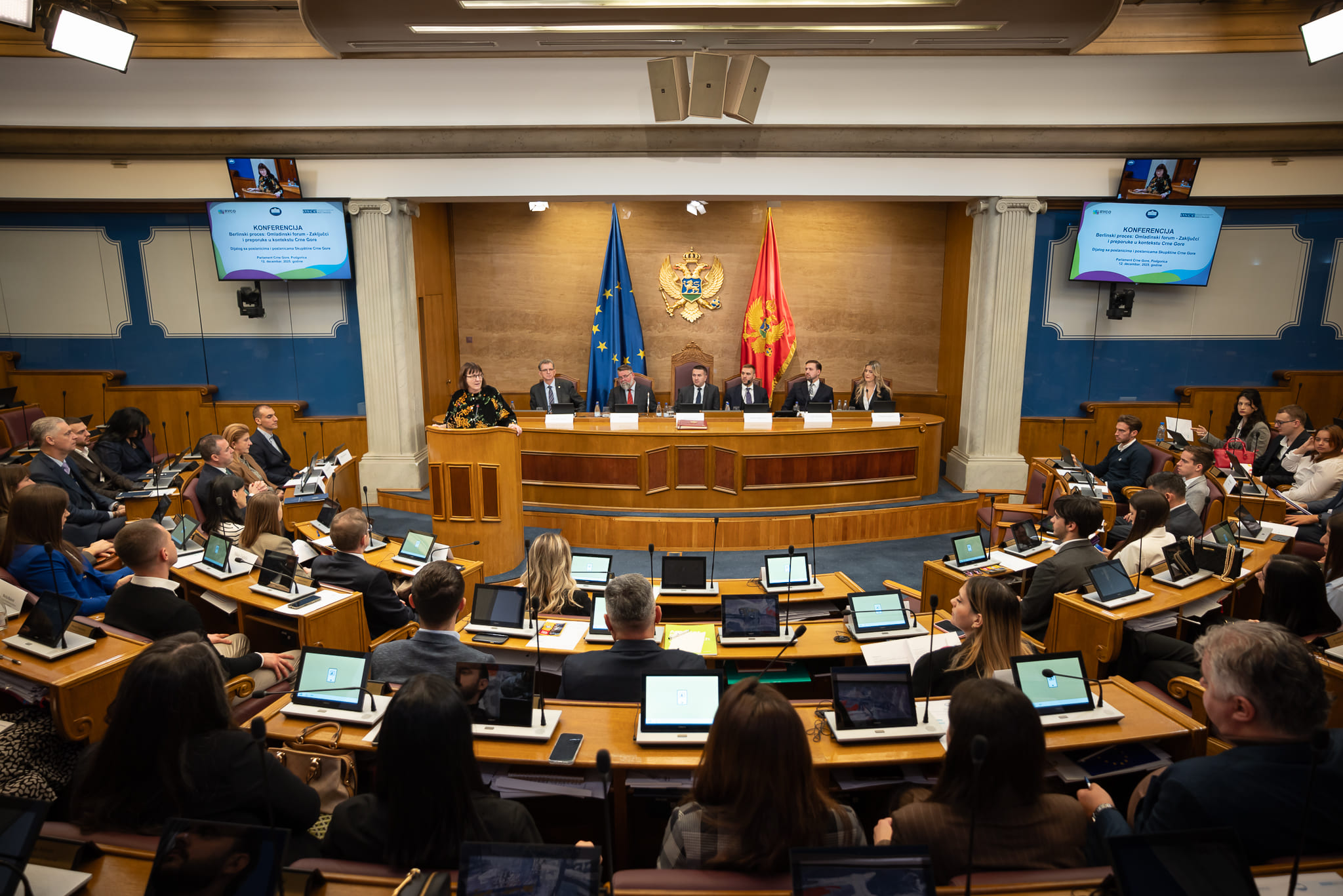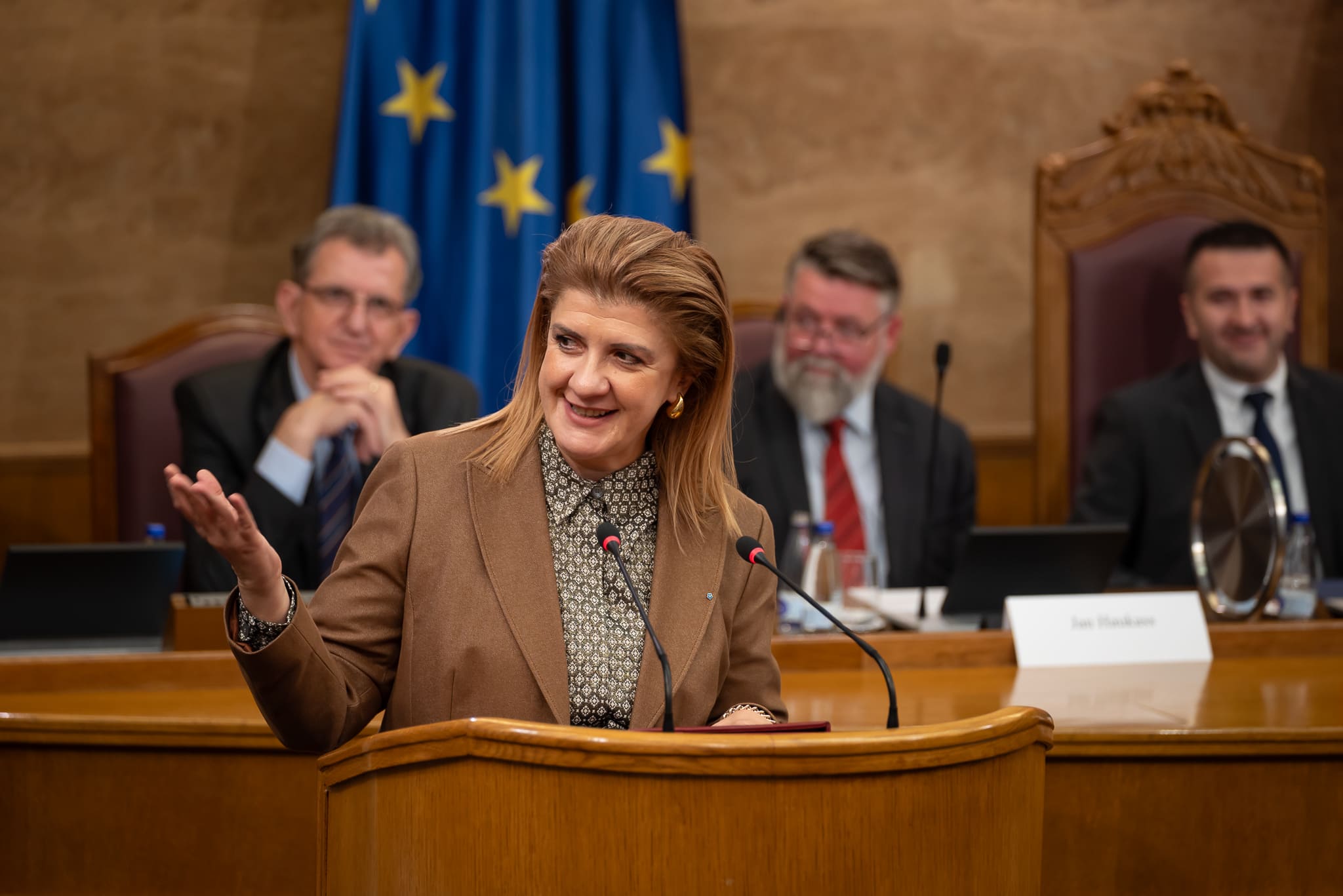
The Parliament of Montenegro today hosted the conference “Berlin Process Youth Forum – Conclusions and Recommendations in the Context of Montenegro”, organized in cooperation with the Local Office of the Regional Youth Cooperation Office (RYCO) and the OSCE Mission to Montenegro.
Opening the conference, Vice President of the Parliament of Montenegro Boris Pejović emphasized the particular importance of holding this event at this moment, ahead of 2026, when Montenegro will assume the Presidency of the Berlin Process. He underlined that this represents both a responsibility and an opportunity to further shape the regional agenda, especially in areas related to youth and their role in society.
Pejović stressed the need to strengthen the parliamentary dimension of the Berlin Process, noting that parliament is the place where policies are shaped and where youth recommendations can receive institutional expression. “Today’s activity is organized precisely with that goal,” the Vice President stated, “to open new doors and new opportunities for youth inclusion in regional processes through dialogue with the legislative branch.”
Vice President of the Parliament Nikola Rakočević, addressing conference participants, recalled that nine years ago his very first speech and vote in parliament concerned the ratification of the agreement establishing the Regional Youth Cooperation Office. He noted that his words at the time were dedicated to young people who, as he emphasized, “always build an antithesis and challenge the imbalance created by older generations.” Rakočević stressed that the youth of Montenegro, grounded in the valuable legacy within the state framework, must continue to contribute to reconciliation and the strengthening of cooperation in the Western Balkans, adding that he still firmly believes in that mission.
Rakočević pointed out that Montenegro and the entire region are currently experiencing the greatest opportunity in modern history, emphasizing the importance of courage, initiative, breaking down barriers, and creating new ideas. He called on young people to insist on European standards and values, noting that the path toward the European Union is far more than a political goal. He stressed that youth responsibility and leadership are crucial for the region, especially given that Montenegro, as he stated, will be the next country to join the European Union. “You will be a beacon and a guide for young people from other candidate countries, showing that hard work, reforms, and overall quality bring historic results,” Vice President Rakočević concluded.
Head of the OSCE Mission to Montenegro, H.E. Jan Haukas, stated that the Declaration on Commitment to Regional Cooperation and Reconciliation, signed by all parliamentary groups, represents an important milestone.
“Today we are here to put this Declaration into practice by listening to young people and those who work with and for them, ensuring that our efforts are guided by their voices. And what better place for this than here, at the heart of decision-making that shapes the lives of all citizens, including young people,” Ambassador Haukas said, adding that “we should always remember that decisions affecting youth should never be made without youth.”
Head of the RYCO Local Office in Montenegro, Edin Koljenović, emphasized that this gathering goes beyond the framework of a traditional conference and represents an important institutional milestone in efforts to make youth policies in Montenegro and the region more inclusive, participatory, and strategically aligned with contemporary international and European standards. He noted that the Western Balkans continues to face challenges requiring long-term commitment, including peace preservation, institutional functionality, economic development, migration, and strengthening a culture of security. According to Koljenović, none of these issues can be successfully addressed without the active involvement of young people, as they are not merely beneficiaries of policies, but their constant partners. “Their worldview, energy, and attitudes must become an integral part of decision-making – their voice is informed and greatly needed,” he stressed.
He recalled that RYCO was established as an institutional response to the region’s need to build trust and intercultural dialogue by connecting young people and creating shared experiences. However, he warned that recent research indicates worrying trends, while RYCO, as a regional structure, through mobility and intercultural learning programs, creates experiences that demonstrably reduce prejudice, strengthen empathy, and enable young people to perceive one another as equal partners.
Minister of Sports and Youth Dragoslav Šćekić highlighted that young people are the true builders of lasting peace and must be placed at the heart of all policies and decision-making. He noted that youth recommendations serve as a valuable guide for institutions in building a society where young people choose to stay, grow, and contribute. Concluding his message, the Minister emphasized that the energy, initiative, and ideas of young people are the driving force behind an open, safe, and hopeful society, encouraging them to be active, brave, and engaged in shaping their future.
Featured in the conference were also the State Secretary at the Ministry of Education, Science and Innovation Tatjana Ćalasan, and Director General of the Directorate for the Development of Creative Industries at the Ministry of Culture and Media Marko Gošović. The speakers highlighted the importance of creating inclusive youth policies that contribute to stronger youth engagement in social and democratic processes.
The event was additionally supported by members of the diplomatic corps, including H.E. Peter Felten, Ambassador of the Federal Republic of Germany, H.E. Dawn McKen, Ambassador of the United Kingdom, and H.E. Anne Marie Maskay, Ambassador of the French Republic, who emphasized their countries’ commitment to strengthening regional cooperation and youth policies in the Western Balkans.
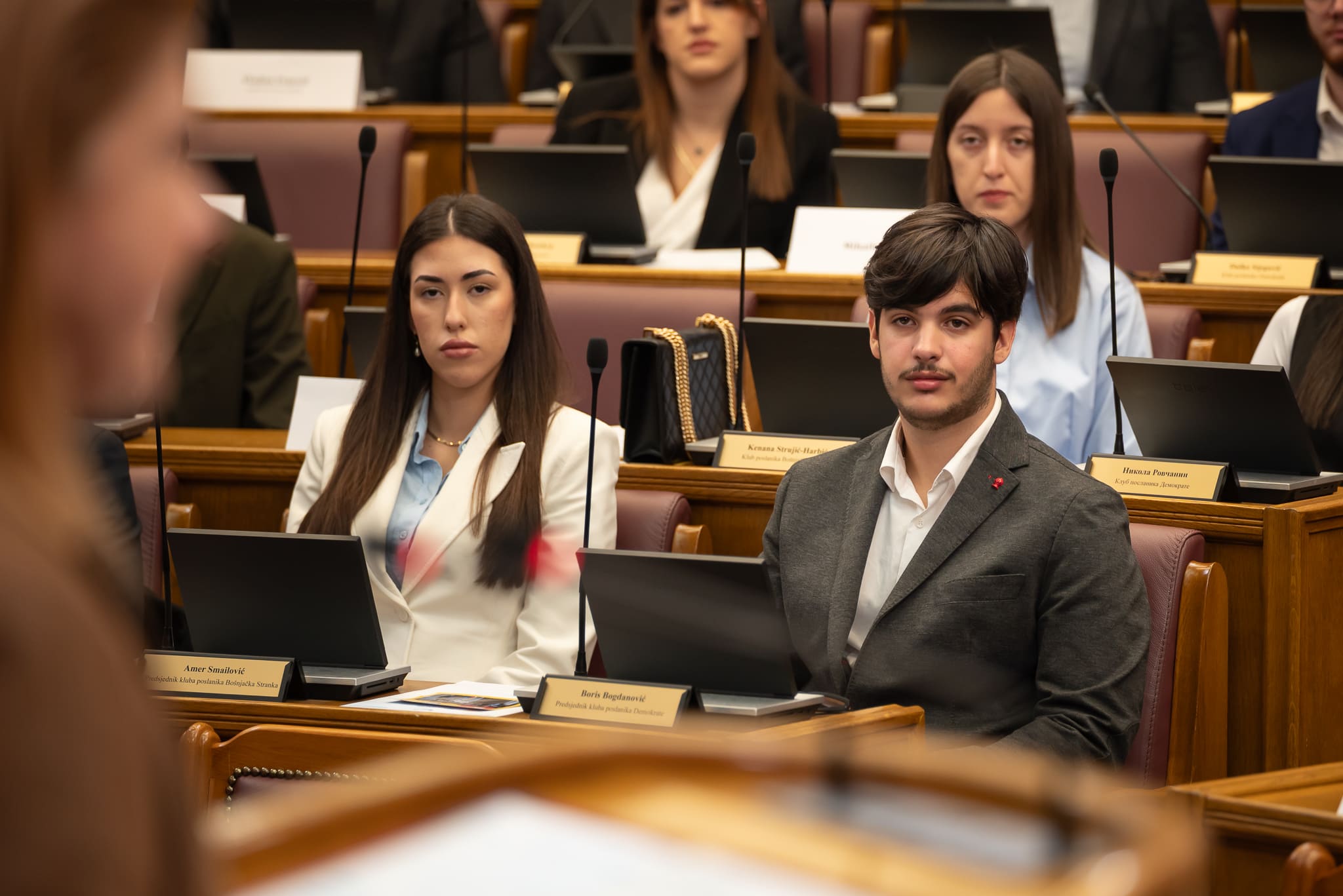
The conference brought together 70 participants, including members of the Parliament of Montenegro, representatives of international organizations, institutions, and the youth sector. The aim was to present the conclusions and recommendations of the Berlin Process Youth Forum 2025 and to discuss ways to apply them in the Montenegrin context. Participants also engaged in discussions on youth, peace, and security within the broader framework of the Berlin Process.